 PlantFun
Plant Needs
Characteristics
- Leaves: Grayish-green (glaucous), pinnately compound, typically with 5 to 7 leaflets, margins serrated;
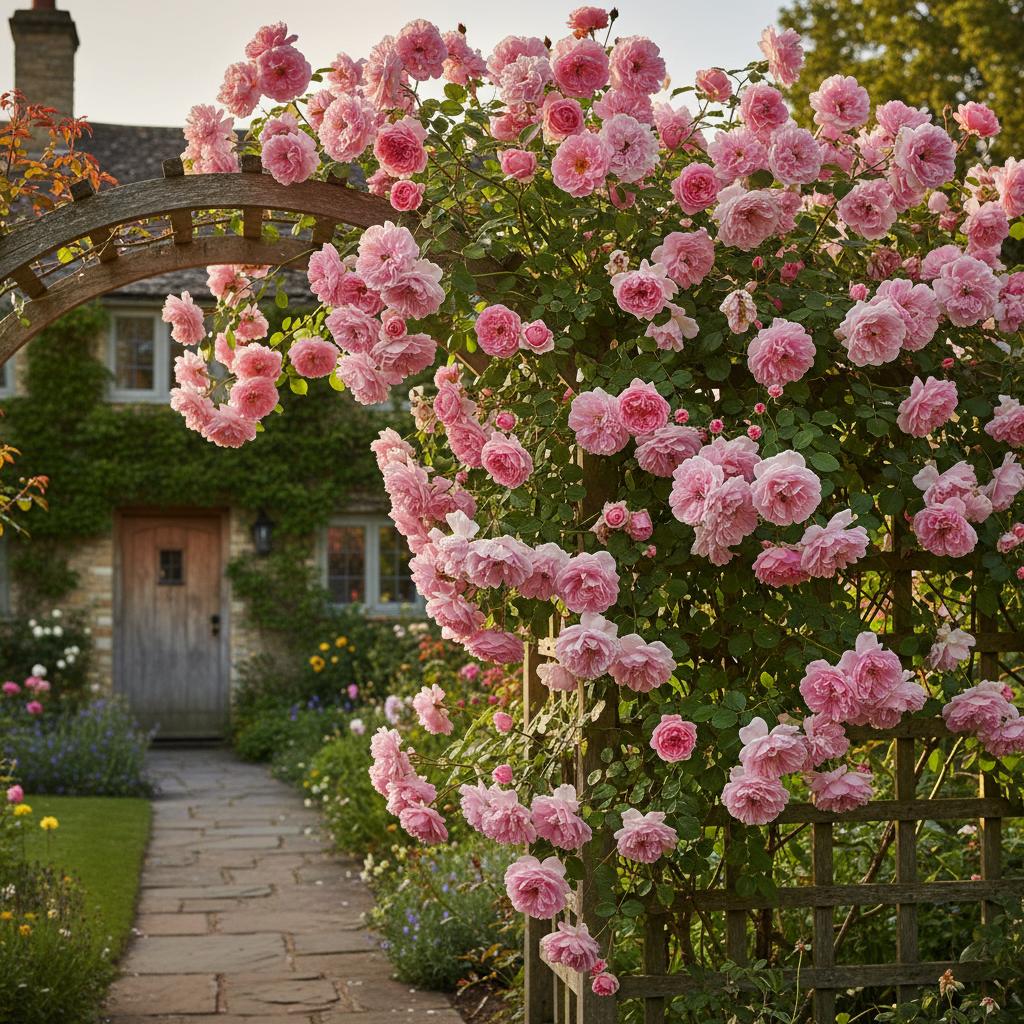
- Flowers: Double or semi-double, soft pink, highly fragrant, borne in small clusters on old wood;
- Stems: Vigorous climbing or rambling canes, upright habit, with relatively few thorns compared to other heritage roses.
Care Guide
Water deeply once a week at the base of the plant to avoid wetting the foliage.
Apply a balanced organic fertilizer as new growth appears.. Feed monthly during the active growing season before blooming.
Banana Peel and Eggshell Mix:Chop banana peels and crush rinsed, dried eggshells. Bury the mixture shallowly around the base of the rose to promote strong cellular growth and prolific blooming. Avoid placing directly against the main stem.- Prune immediately after flowering, as Alba roses bloom on old wood;
- Remove dead, diseased, or crossing canes to maintain good airflow;
- Tie and train flexible new canes horizontally along a trellis or wall to encourage more lateral blooming shoots;
- Do not hard prune in early spring, or you will remove the year's flower buds.
Toxicity
Warning: this plant may be toxic.
Pets: Non-toxic per ASPCA.
Humans: Non-toxic; petals and rose hips are edible and often used in culinary applications.
Garden Uses & Culture
Culture: Alba roses date back to the Middle Ages and Renaissance Europe. They are often associated with purity and were widely cultivated in monastery gardens. The white Alba was the symbol of the House of York during the Wars of the Roses, though pink sports and hybrids have been cherished for centuries.
Usage: Excellent for training on trellises, walls, and pergolas. Petals are used for potpourri, rose water, and culinary garnishes.