 PlantFun
Plant Needs
Characteristics
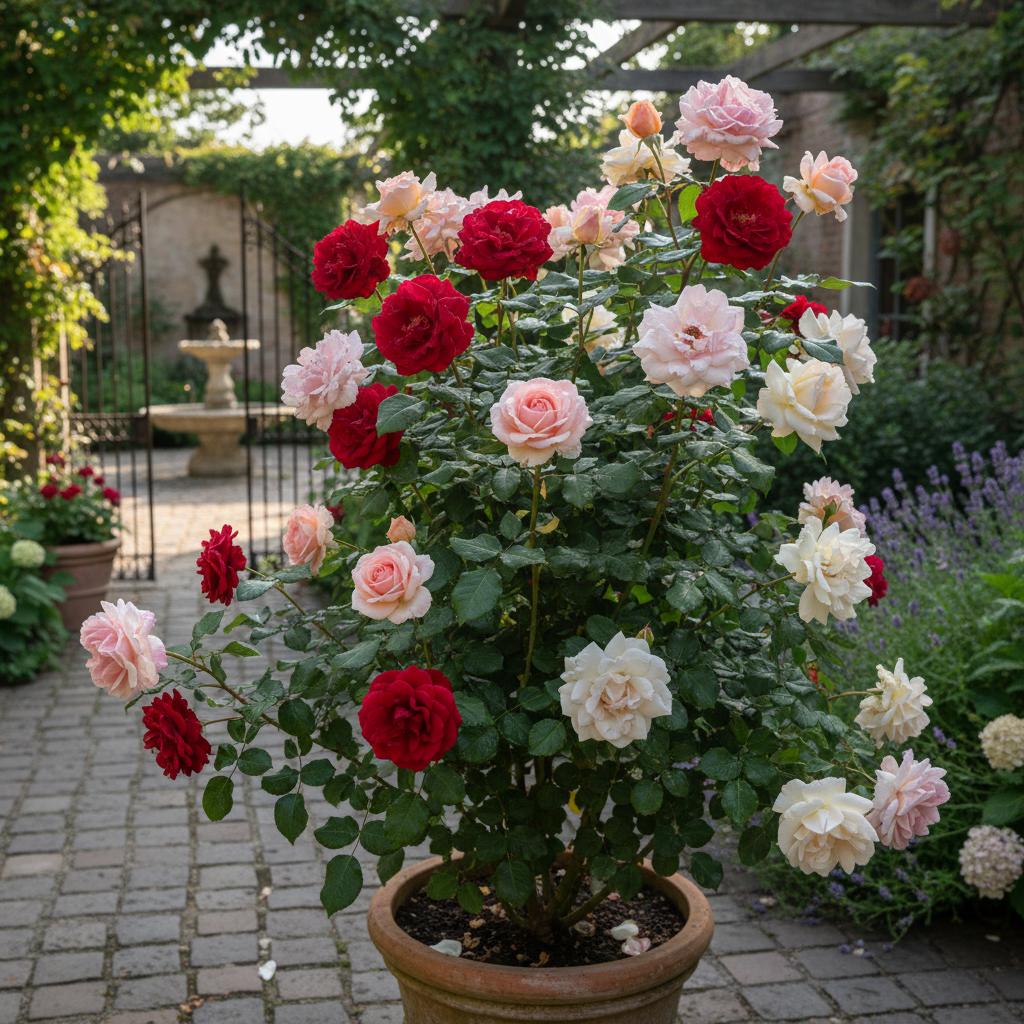
- Leaves: Alternate, odd-pinnately compound, leaflets ovate with serrate margins, often glossy dark green;
- Flowers: Showy, solitary or in corymbs, multiple petals (double or semi-double), available in various colors including red, pink, white, and yellow, often highly fragrant;
- Stems: Upright to arching, typically armed with sharp, curved prickles (thorns);
- Fruits: Fleshy, berry-like structure called a rose hip, usually red or orange when ripe.
Care Guide
Water deeply at the base 1-2 times a week, avoiding overhead watering to prevent black spot and powdery mildew.
Apply a balanced fertilizer as new leaf buds begin to swell and grow.. Regular feeding is essential for repeat-blooming hybrids.
Banana Peel Tea:Steep chopped banana peels in water for 2-3 days, strain, and use the liquid to water the base of the rose. This provides a gentle potassium boost for larger blooms. Discard the solid peels in a compost bin to avoid attracting pests.- Prune in late winter or early spring before new growth begins;
- Remove all dead, diseased, or damaged canes down to the base;
- Cut remaining healthy canes back by about one-third to an outward-facing bud to encourage an open center;
- Remove crossing branches to improve air circulation;
- Deadhead spent flowers during the blooming season to encourage new buds.
Toxicity
Warning: this plant may be toxic.
Pets: Non-toxic per ASPCA; safe for cats, but thorns may cause physical injury if chewed.
Humans: Non-toxic; petals and hips are edible, though caution is advised regarding mechanical injury from thorns.
Garden Uses & Culture
Culture: A universal symbol of love, passion, and secrecy in Western culture. The term "sub rosa" (under the rose) denotes secrecy, originating from ancient Roman traditions. It is heavily featured in heraldry, most notably in the English Wars of the Roses.
Usage: Widely used in ornamental landscaping, as cut flowers for floristry, and in the perfume and cosmetic industries. Rose hips are harvested for tea and vitamin C supplements.