 PlantFun
Plant Needs
Sunlight
Requires full, direct sunlight to develop strong coloration and robust pitchers.
Watering
Requires constant moisture; best kept sitting in a tray of distilled, rain, or reverse osmosis water.
Temperature
Tolerates high summer heat but requires a cold winter dormancy period to survive long-term.
Characteristics
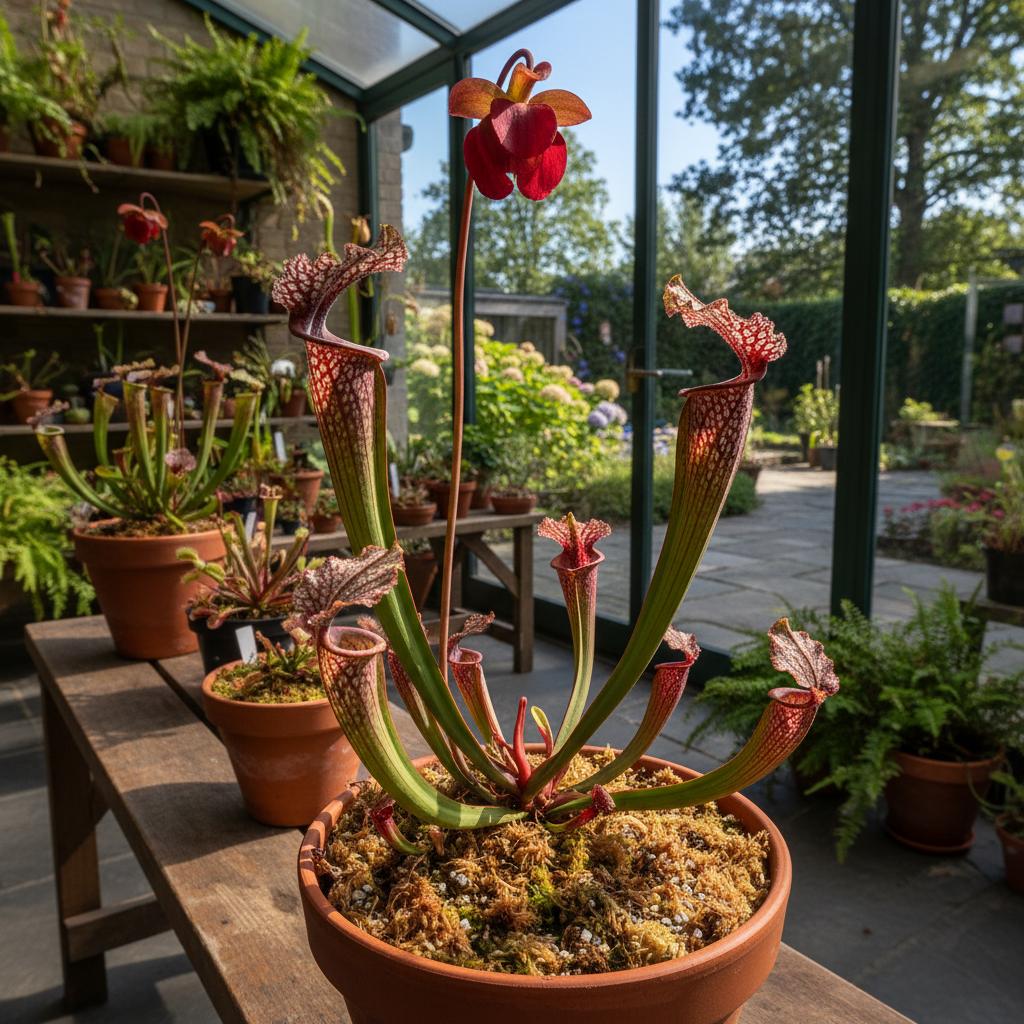
- Leaves: Modified into tubular pitchers, intermediate between parents; semi-upright with a broad, ruffled hood, featuring prominent maroon or red venation over a green to white background.
- Flowers: Solitary, nodding, dark red to maroon flowers borne on leafless scapes, featuring a distinctive umbrella-shaped style.
- Roots: Creeping rhizomes that anchor the plant in boggy, nutrient-poor soils.
Care Guide
Watering
Keep the pot sitting in 1 to 2 inches of pure water at all times.
Fertilization
Do not apply traditional fertilizer to the soil.. Carnivorous plants derive nutrients from insects; soil fertilization is fatal.
Household Insect Feeding:Use freshly swatted household flies, mosquitoes, or rehydrated freeze-dried bloodworms. Drop one insect directly into a mature, open pitcher. Never use food scraps, compost, or standard DIY fertilizers (like banana peels or coffee grounds) in the soil, as the minerals and decay will burn the roots and kill the plant.Pruning
- Wait until late winter or early spring just before new growth begins.
- Cut off all dead, brown pitchers near the base of the rhizome.
- Leave any pitchers that are still green, as they continue to photosynthesize.
Toxicity
Warning: this plant may be toxic.
Pets & Humans
Pets: Non-toxic to cats per ASPCA guidelines.
Humans: Non-toxic to humans; safe to handle.
Garden Uses & Culture
Culture: Carnivorous plants have fascinated Western botanists since the 18th century, often featured in Victorian botanical collections as symbols of the bizarre and wondrous adaptations of the natural world.
Usage: Excellent for outdoor bog gardens, water garden margins, and natural control of flies and wasps.