 PlantFun
Plant Needs
Sunlight
Requires full sun for optimal coloration and tight rosette formation.
Watering
Highly drought-tolerant; water only when the soil is completely dry.
Temperature
Extremely cold hardy and heat tolerant.
Characteristics
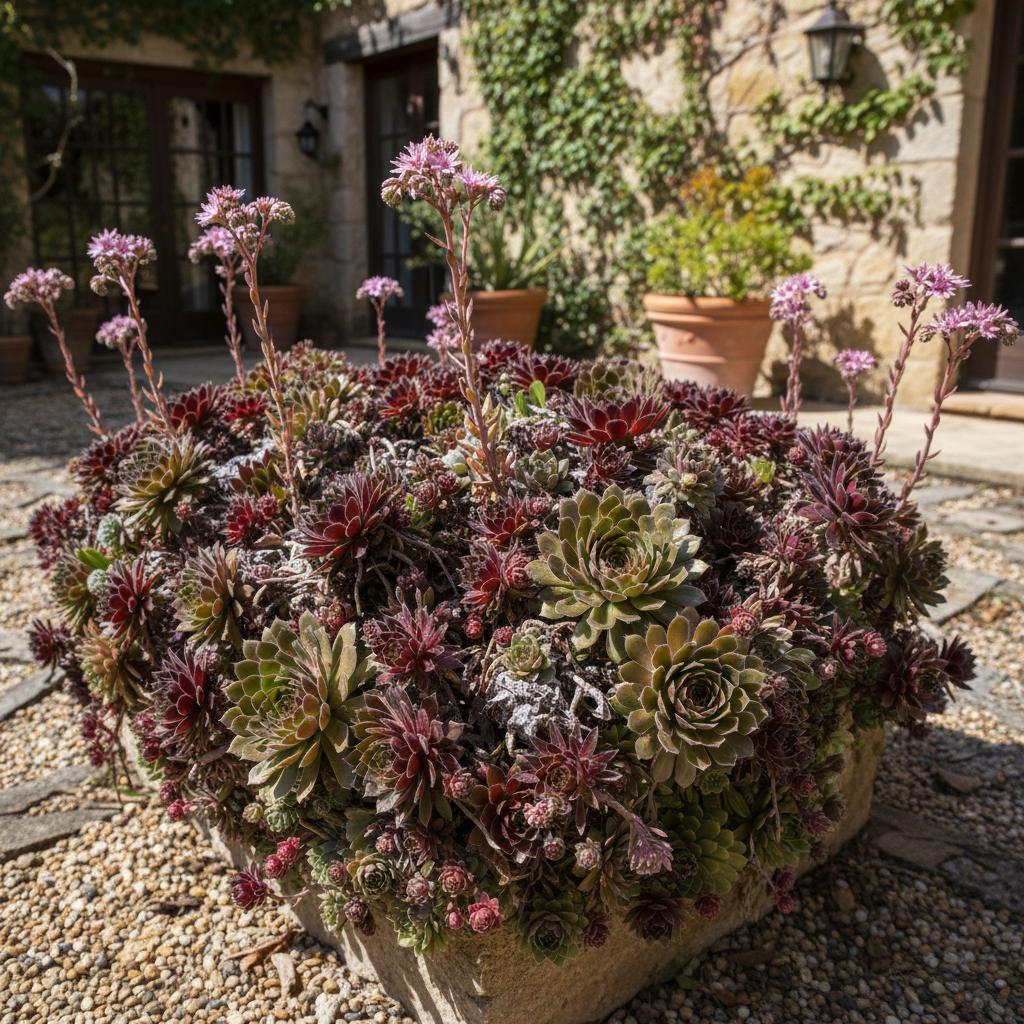
- Leaves: Fleshy, obovate to lanceolate, forming tight basal rosettes, green with purple or red tips, margins often ciliate;
- Flowers: Star-shaped, pink to purplish-red, borne on thick, leafy, upright stems emerging from mature rosettes;
- Roots: Fibrous, shallow root system, producing numerous offsets (stolons) to form dense mats.
Care Guide
Watering
Water deeply but infrequently, allowing soil to dry out entirely between waterings
Fertilization
Apply a very dilute, low-nitrogen fertilizer once. Rarely needs fertilization; thrives in nutrient-poor soils.
Eggshell Powder:Crush rinsed and dried eggshells into a fine powder and sprinkle on the soil surface to provide calcium and improve drainage; avoid over-application.Pruning
- Remove dead or dried basal leaves gently with tweezers to prevent fungal rot;
- Cut back dead flower stalks at the base after blooming, as the flowering rosette will naturally die (monocarpic);
- Separate and replant offsets (chicks) if the cluster becomes too crowded.
Toxicity
Warning: this plant may be toxic.
Pets & Humans
Pets: Non-toxic to cats per ASPCA.
Humans: Non-toxic to humans.
Garden Uses & Culture
Culture: Historically planted on roofs in Europe to ward off lightning and fire, associated with Jupiter and Thor.
Usage: Rock gardens, green roofs, container gardening, ground cover, and alpine troughs.