 PlantFun
Plant Needs
Characteristics
- Leaves: Opposite, simple, oval to elliptic, 1.5 - 5 cm long, dark green above and paler beneath, margins entire or lobed on fast-growing shoots;
- Flowers: Small, bell-shaped, pink to white, borne in dense clusters at the ends of branches or in leaf axils;
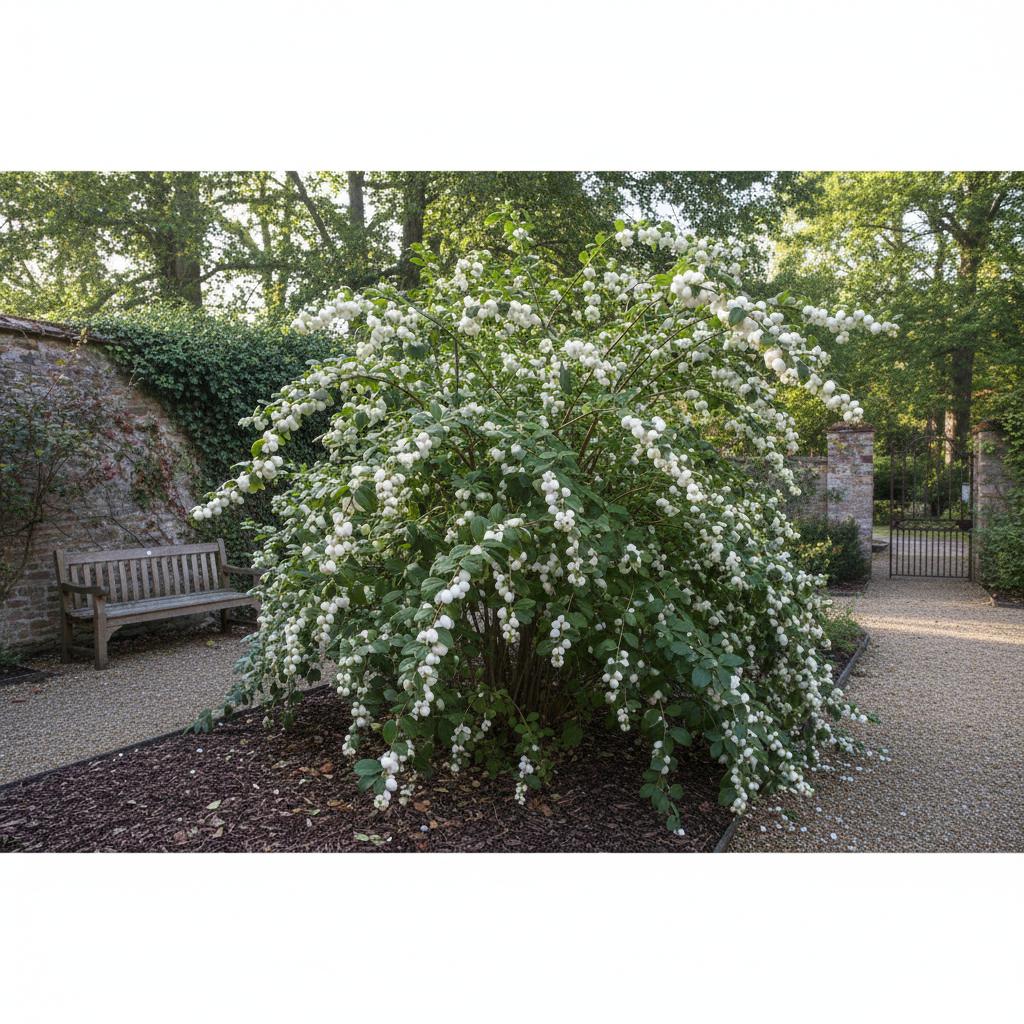
- Fruit: Conspicuous, fleshy, pure white berry-like drupes, 1 - 1.5 cm in diameter, spongy inside, persisting well into winter;
- Bark: Thin, grayish-brown, often shredding or peeling in thin strips on older stems.
Care Guide
Water deeply once a week during active growth and dry spells.
Apply a light layer of compost or a balanced organic fertilizer as new growth appears.. Snowberries are light feeders; avoid over-fertilizing, which promotes leggy foliage at the expense of berries.
Banana Peel Tea:Steep chopped banana peels in water for 24-48 hours. Dilute 1:1 with water and apply to the base to support root health and fruiting. Discard solids in compost to avoid attracting pests.- Prune in late winter or early spring before new growth begins;
- Remove dead, damaged, or crossing branches to improve air circulation;
- Thin out older stems at the base to encourage vigorous new shoots;
- Can be cut back hard (coppiced) every few years to rejuvenate an overgrown shrub;
- Control unwanted spread by digging up root suckers if a tidy habit is desired.
Toxicity
Warning: this plant may be toxic.
Pets: Toxic per ASPCA; ingestion of berries or leaves can cause mild gastrointestinal upset.
Humans: Berries contain saponins and alkaloids (chelidonine) which can cause mild gastrointestinal distress if ingested in large quantities.
Garden Uses & Culture
Culture: In North American indigenous cultures, the hollow stems were traditionally used to make pipe stems and arrow shafts, while the berries were sometimes used as a hair soap due to their saponin content.
Usage: Widely used in ornamental landscaping for winter interest, erosion control on slopes, and as a crucial late-winter food source for birds and wildlife.