 PlantFun
Plant Needs
Characteristics
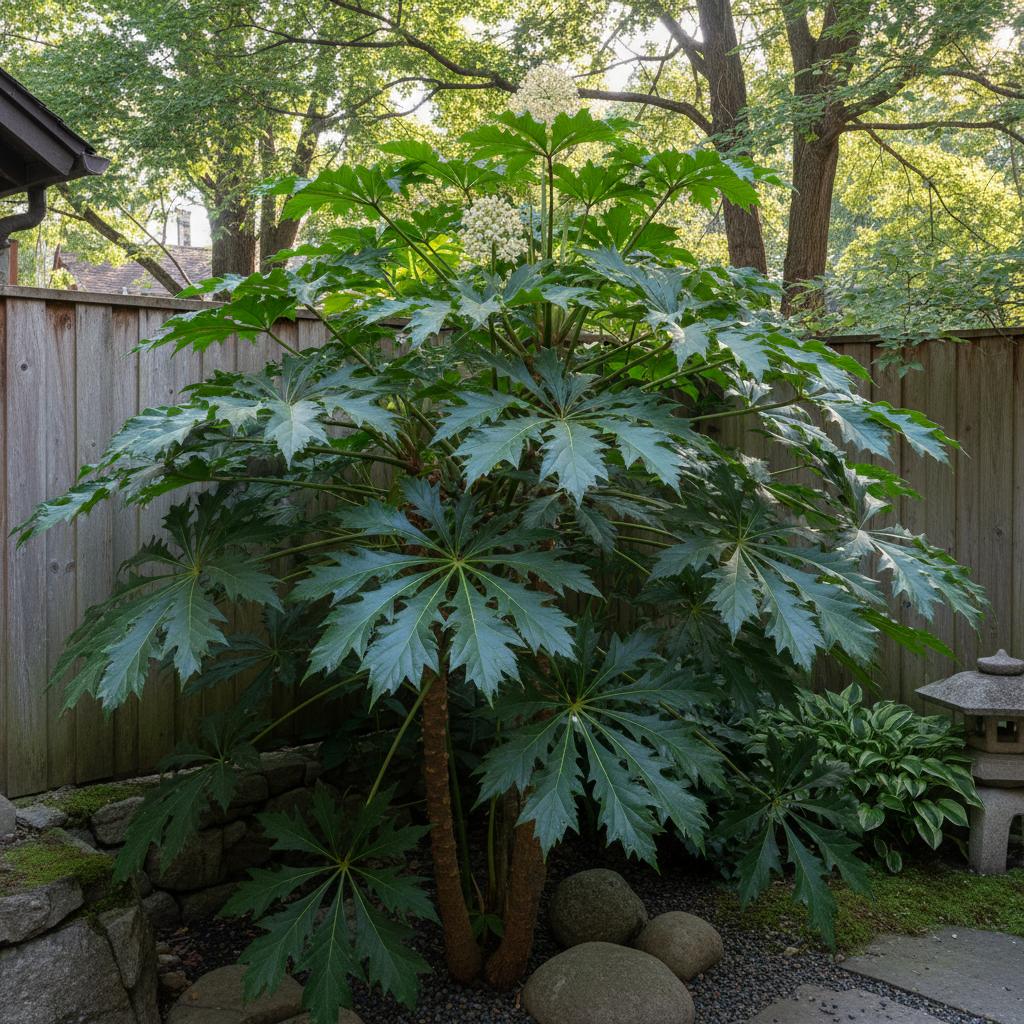
- Leaves: Alternate, extremely large (up to 1 meter long), bipinnate or tripinnate; leaflets are ovate to cordate with sharply serrated margins and a bright green color;
- Flowers: Small, greenish-white to cream-colored, arranged in numerous umbels that form large, striking terminal panicles;
- Stems: Stout, fleshy, pale green to purplish, widely branching, dying back completely to the ground in winter;
- Fruit: Small, globose, purplish-black fleshy drupes appearing in autumn, providing forage for birds.
Care Guide
Water deeply and regularly to support massive vegetative growth.
Apply a rich layer of compost or balanced organic fertilizer as new shoots emerge.. Feed monthly during the active growing season to support its large size.
Coffee Ground Compost Tea:Steep used coffee grounds and vegetable scraps in water for a few days. Dilute 1:4 with fresh water before applying to the root zone to boost lush foliage growth. Avoid using uncomposted raw materials directly against the stems.- Cut all dead stems back to the ground level in late autumn or early winter after frost;
- Remove any damaged or diseased foliage during the summer to maintain appearance;
- Harvest young shoots in early spring if cultivating for culinary purposes, leaving enough for the plant to establish.
Toxicity
Warning: this plant may be toxic.
Pets: May cause mild gastrointestinal upset if large quantities of raw foliage are ingested.
Humans: Generally safe; young shoots are edible when cooked, though raw consumption of mature parts may cause mild stomach upset.
Garden Uses & Culture
Culture: In Western horticulture, it is highly prized as a bold, architectural statement plant, often used by landscape designers to create a lush, tropical effect in cold-climate woodland gardens.
Usage: Ornamental landscaping for shade gardens, woodland borders, and as a dramatic backdrop plant. Young shoots are blanched and eaten as a culinary delicacy.