 PlantFun
Plant Needs
Characteristics
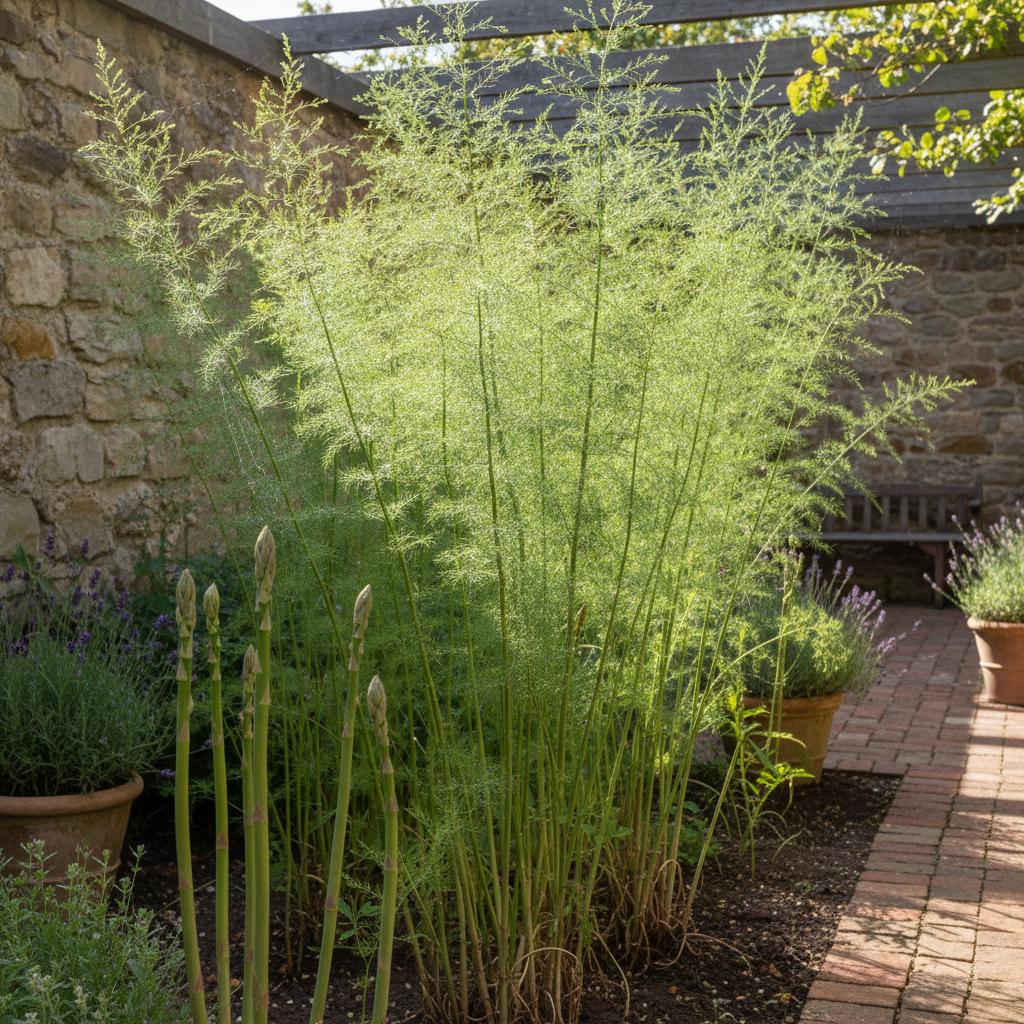
- Leaves: True leaves are reduced to tiny, scale-like structures; the feathery green "foliage" consists of modified stems called cladodes.
- Stems: Edible shoots (spears) emerge thick and green with purplish tips in spring, later branching into tall, fine, fern-like stalks.
- Flowers: Small, pendulous, bell-shaped, yellowish-green flowers appearing at the junctions of the cladodes.
- Fruit: Small, spherical red berries produced only on female plants, containing black seeds.
- Roots: Forms a dense, fleshy crown with an extensive root system that stores energy for spring growth.
Care Guide
Keep soil consistently moist during spear production and active fern growth.
Apply a balanced organic fertilizer or top-dress with compost before spears emerge.. Heavy feeder; requires rich nutrients to store energy in the crown for the following year's harvest.
Coffee Grounds and Compost Tea:Mix used coffee grounds lightly into the topsoil for a gentle nitrogen boost to support fern growth, or water with steeped compost tea. Avoid applying fresh, uncomposted materials directly to the crowns to prevent rot.- Establishment: Do not harvest spears the first year after planting crowns; allow them to fern out to establish a strong root system.
- Harvesting: Stop harvesting when spears become thinner than a pencil (usually after 6-8 weeks in mature beds).
- Summer Care: Allow the ferns to grow fully through the summer to photosynthesize and store energy in the crowns.
- Winter Cleanup: Cut dead ferns down to the ground (about 2 inches above soil) in late fall or early winter only after they have turned completely brown.
Toxicity
Warning: this plant may be toxic.
Pets: Ingestion of berries may cause vomiting and diarrhea; repeated dermal contact with the sap can cause allergic dermatitis (per ASPCA).
Humans: The young shoots are edible and safe, but the red berries are mildly toxic if ingested, and raw shoots/sap may cause mild contact dermatitis in sensitive individuals.
Garden Uses & Culture
Culture: Asparagus has been cultivated since antiquity, highly prized by the ancient Greeks and Romans. The 'Mary Washington' cultivar revolutionized American asparagus farming in the 1920s by introducing vital rust resistance.
Usage: Primarily grown as a highly valued culinary vegetable; mature ferns are occasionally used as filler in floral arrangements.