 PlantFun
Plant Needs
Characteristics
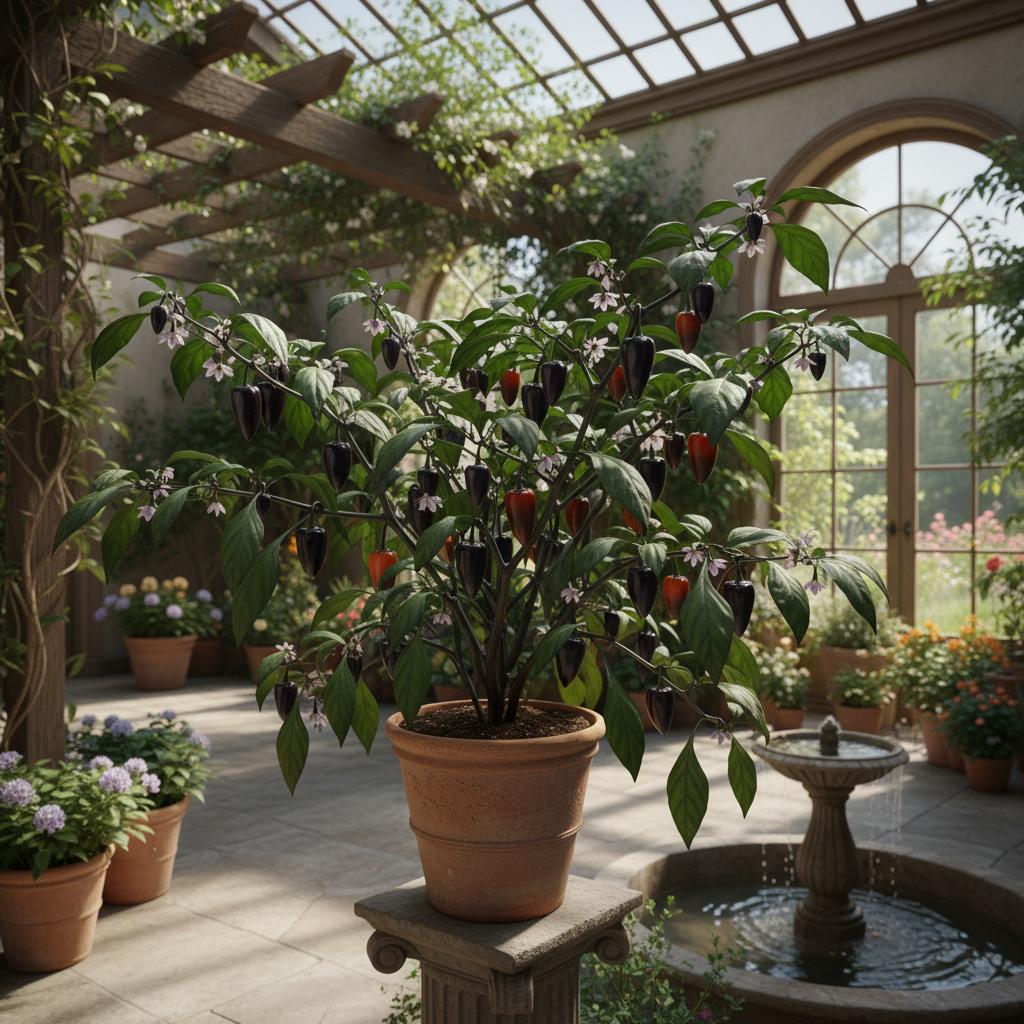
- Leaves: Dark purple to almost black, ovate to lanceolate, smooth margins, providing striking dark foliage.
- Flowers: Small, star-shaped, white to pale purple with dark markings, typical of Capsicum species.
- Fruits: Elongated, pendant pods that remain deep purple-black even when fully ripe, extremely pungent (spicy).
- Stem: Dark purple to black, branching, becoming woody at the base with age.
Care Guide
Water deeply when the top inch of soil feels dry, usually 2-3 times a week depending on heat.
Apply a balanced or nitrogen-rich fertilizer to encourage strong vegetative growth.. Feed regularly during the active growing season, reducing as the season ends.
Banana Peel Tea:Soak chopped banana peels in water for 24-48 hours. Dilute 1:1 with water and apply to the base of the plant to promote flowering and fruiting. Discard peels in compost to avoid foul odors and pests.- Pinch off early flower buds to encourage the plant to grow larger and bushier before setting fruit.
- Remove any yellowing, dead, or diseased leaves at the base to improve air circulation.
- Prune back leggy branches to maintain a compact shape.
Toxicity
Warning: this plant may be toxic.
Pets: Toxic per ASPCA; ingestion can cause oral and gastrointestinal irritation.
Humans: Fruits are edible but contain high levels of capsaicin; sap and oils can cause skin and eye irritation.
Garden Uses & Culture
Culture: Highly prized among chili enthusiasts in the Americas and Europe for its unique characteristic of retaining a dark purple-black color even when fully ripe, unlike most peppers that turn red.
Usage: - **Culinary**: Used in hot sauces and spicy dishes (extremely hot, similar to Habanero heat levels). - **Ornamental**: Grown for its striking dark foliage and contrasting fruits in landscape beds and containers.