 PlantFun
Plant Needs
Characteristics
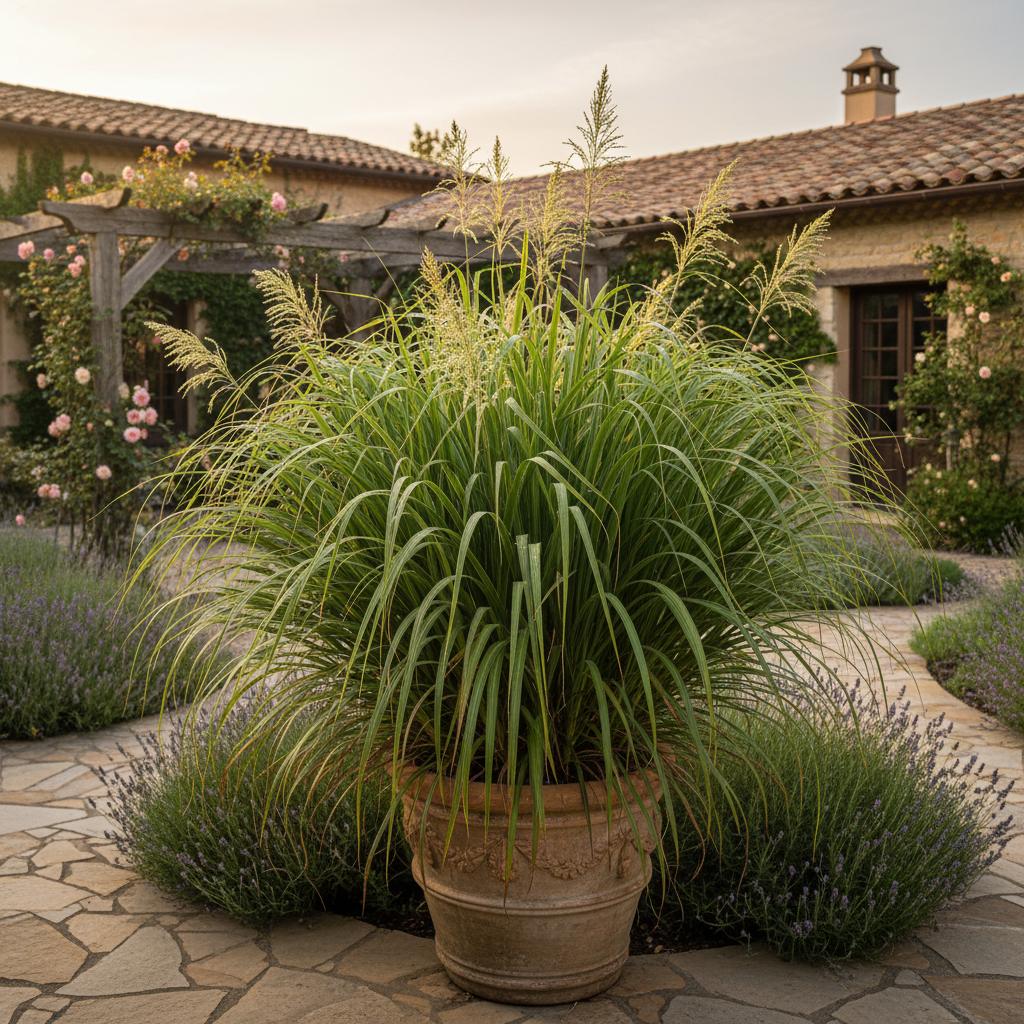
- Leaves: Long, linear, glaucous-green leaves up to 1 meter long, drooping at the tips, with rough margins and a strong lemon scent when crushed;
- Stems: Short, robust rhizomes producing dense clumps of pseudostems formed by tightly overlapping leaf sheaths;
- Flowers: Large, complex panicles with paired racemes, though rarely seen outside of its native tropical habitats;
- Roots: Dense, fibrous root system that spreads outward to form thick clumps.
Care Guide
Water deeply and regularly to keep the soil evenly moist during the active growing season.
Apply a nitrogen-rich fertilizer to encourage lush, leafy growth.. Lemongrass is a heavy feeder during its peak growing season.
Coffee Grounds Tea:Steep used coffee grounds in water overnight, strain, and use the liquid to water the plant. Provides a gentle nitrogen boost for leafy growth. Avoid applying thick layers of raw grounds directly to soil to prevent mold.- Cut back dead or brown foliage to the base in late winter or early spring;
- Harvest stalks for culinary use by cutting them at the soil line;
- Divide large, overcrowded clumps every 2-3 years to maintain plant vigor and propagate new plants.
Toxicity
Warning: this plant may be toxic.
Pets: Toxic to cats per ASPCA. Contains essential oils and cyanogenic glycosides that can cause gastrointestinal upset.
Humans: Generally safe for human consumption; widely used as a culinary herb. Essential oil may cause skin irritation in sensitive individuals.
Garden Uses & Culture
Culture: In Western herbalism and modern aromatherapy, lemongrass has been widely adopted for its uplifting, clean scent, often associated with purification, vitality, and natural living.
Usage: - **Culinary**: Stalks and leaves are heavily used in teas, soups, and curries; - **Aromatic**: Extracted essential oils are used in perfumes, soaps, and candles; - **Practical**: Acts as a natural insect repellent (especially mosquitoes) when oils are extracted.