 PlantFun
Plant Needs
Sunlight
Requires full sun for optimal growth and bud production.
Watering
Needs consistent moisture, especially during bud formation; do not let the soil dry out completely.
Temperature
Thrives in mild climates; 'Tavor' is specifically bred to require less vernalization (chilling) to produce buds in its first year.
Characteristics
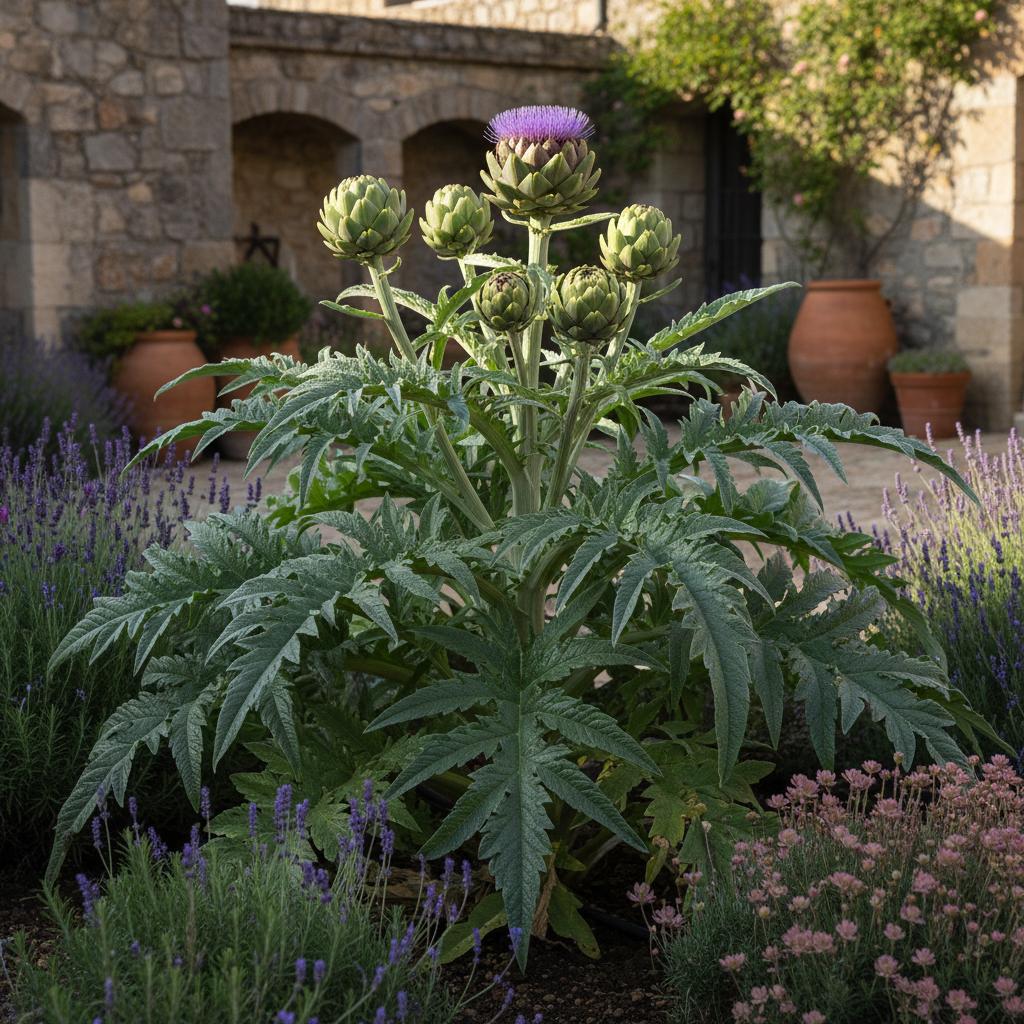
- Leaves: Deeply lobed, silvery-green, glaucous, up to 1 meter long, forming a large basal rosette;
- Flowers: Large, globe-shaped capitula with fleshy overlapping involucral bracts and a fleshy receptacle; if left to bloom, produces vibrant purple tubular florets;
- Stem: Stout, ridged, branching flower stalks that emerge from the center of the rosette.
Care Guide
Watering
Water deeply and consistently to support large foliage and fleshy buds.
Fertilization
Apply a balanced organic fertilizer as new growth emerges.. Heavy feeders; require rich soil and regular nutrient replenishment.
Banana Peel and Coffee Ground Mix:Bury chopped banana peels and used coffee grounds in the soil around the base of the plant to provide slow-release potassium for bud development and nitrogen for foliage. Avoid placing directly against the stem.Pruning
- Harvest central buds first when they are tight and plump, cutting 2-3 inches below the base;
- Harvest secondary side buds as they mature;
- In late autumn, cut the main stalks down to the ground after the foliage begins to yellow;
- In cold climates, mulch heavily over the crown with straw or leaves to protect from freezing.
Toxicity
Warning: this plant may be toxic.
Pets & Humans
Pets: Non-toxic to cats per ASPCA guidelines.
Humans: Non-toxic; the immature flower buds (hearts and fleshy base of bracts) are widely consumed as a vegetable.
Garden Uses & Culture
Culture: Highly prized in Mediterranean and European culinary traditions; historically considered a luxury vegetable and an aphrodisiac in ancient Rome.
Usage: Culinary (edible buds), ornamental landscaping, architectural border plant.