 PlantFun
Plant Needs
Characteristics
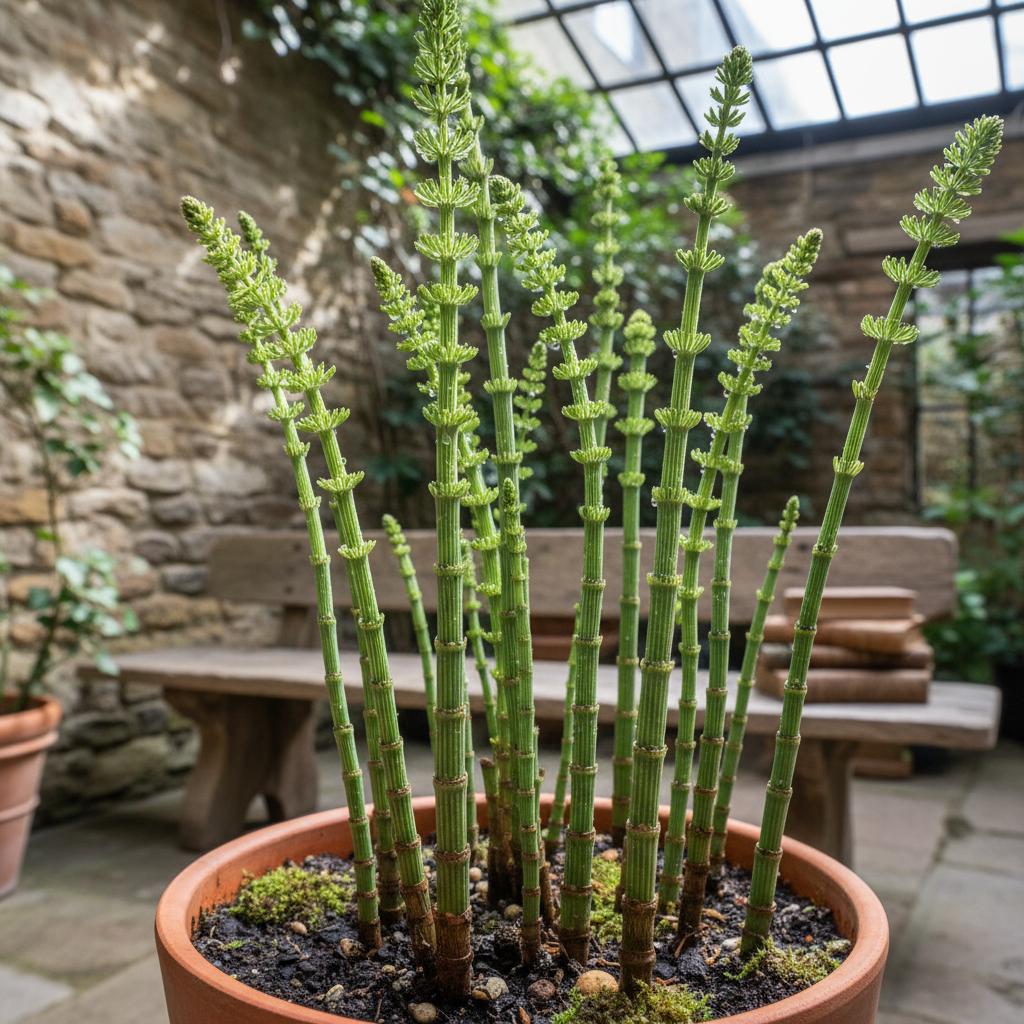
- Stems: Green, photosynthetic, heavily jointed and hollow, with longitudinal ridges impregnated with silica; sterile stems are highly branched, while fertile stems are unbranched and brownish.
- Leaves: Reduced to tiny, non-photosynthetic dark scales fused into sheaths at the stem nodes.
- Reproductive Structures: Cone-like strobili at the apices of fertile stems that release pale green spores.
- Rhizomes: Extensive, deep-creeping dark brown underground rhizome network.
Care Guide
Keep soil consistently wet or submerged in shallow water.
Rarely required; a light application of organic compost if growth is stunted.. This plant thrives in nutrient-poor soils and generally does not require supplemental feeding.
Used Aquarium Water:Use water from routine fish tank changes to provide gentle, dilute nutrients. Avoid water treated with heavy medications or high salts.- Cut back dead or browning stems to the base in late winter or early spring.
- Aggressively prune and dispose of escaping rhizomes if grown in the ground.
- Remove fertile, spore-bearing stems before they release spores to prevent unwanted spreading.
Toxicity
Warning: this plant may be toxic.
Pets: Toxic per ASPCA (contains thiaminase); ingestion can cause neurological issues over time due to Vitamin B1 depletion.
Humans: Contains thiaminase; consuming large amounts of raw plant material can lead to Vitamin B1 deficiency and mild electrolyte imbalances.
Garden Uses & Culture
Culture: Historically known as "scouring rush" in Europe and North America, early settlers used the silica-rich stems to scour wooden floors, polish metal, and clean cooking pots.
Usage: Ornamental planting in water gardens, historical use as a natural abrasive, and traditional herbal applications.