 PlantFun
Plant Needs
Sunlight
Requires full, direct sunlight for optimal fruit production and tree health.
Watering
Water deeply when the top 2-3 inches of soil become dry.
Temperature
Prefers warm climates; protect from frost and freezing temperatures.
Characteristics
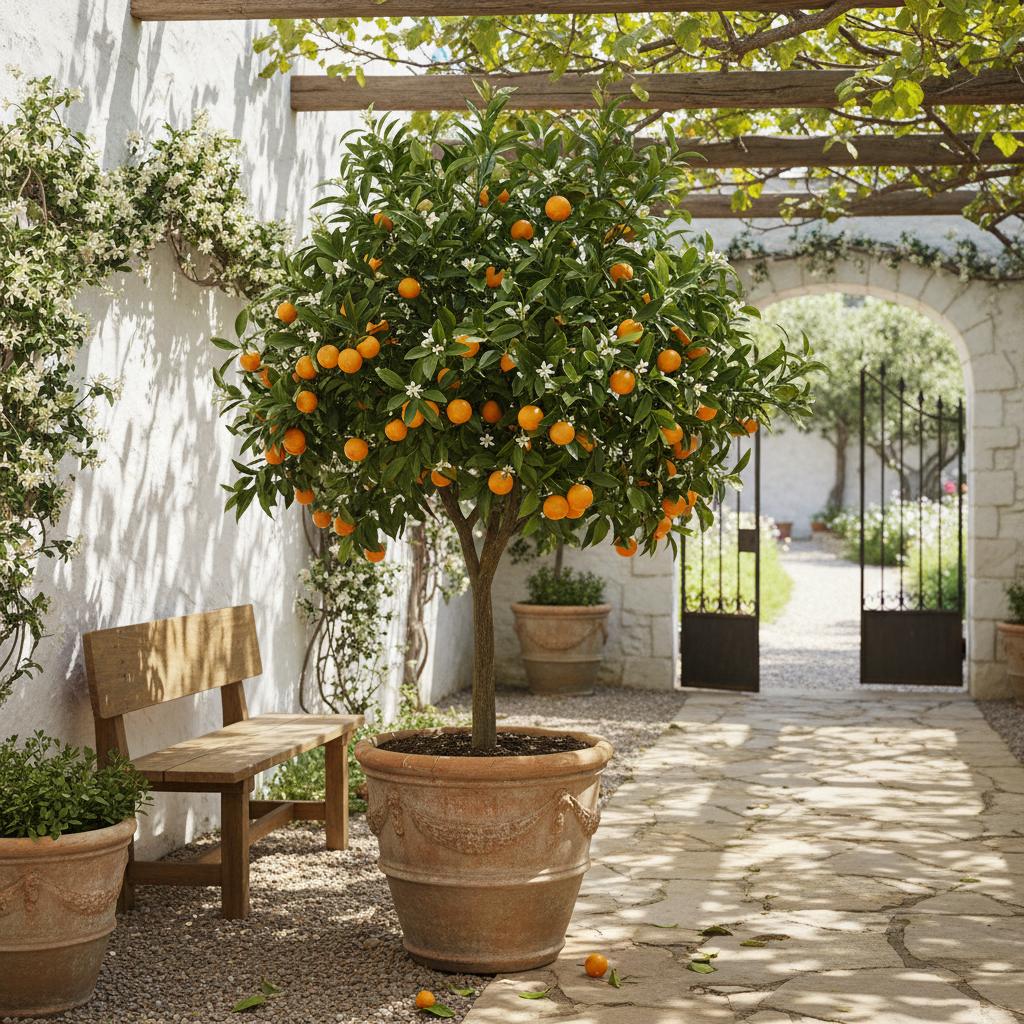
- Leaves: Evergreen, lanceolate to ovate, glossy dark green, with narrowly winged petioles;
- Flowers: Small, white, highly fragrant, usually solitary or in small clusters in leaf axils;
- Fruits: Oblate to spherical hesperidium, bright orange when ripe, peel is thin and easily separated from the segments;
- Bark: Grayish-brown, relatively smooth, branches may have small thorns.
Care Guide
Watering
Water deeply once a week, allowing soil to dry slightly between waterings.
Fertilization
Apply a nitrogen-rich citrus fertilizer as new growth appears.. Feed monthly during the active growing season.
Coffee Ground and Banana Peel Mix:Mix used coffee grounds and chopped banana peels into the topsoil to provide gentle acidity and potassium for fruit development. Avoid applying too close to the trunk to prevent rot.Pruning
- Prune in late winter before new growth begins;
- Remove dead, diseased, or crossing branches to improve air circulation;
- Thin out the canopy to allow sunlight to reach the inner branches and ripening fruit.
Toxicity
Warning: this plant may be toxic.
Pets & Humans
Pets: Toxic per ASPCA; essential oils and psoralens in peels/leaves can cause GI upset.
Humans: Fruits are edible and safe for human consumption.
Garden Uses & Culture
Culture: In Western cultures, mandarins are a traditional Christmas treat, often placed in the toes of Christmas stockings as a symbol of gold, generosity, and good fortune.
Usage: Fruits are eaten fresh or juiced; the zest is used in baking, and essential oils from the peel are used in perfumery and cleaning products.