 PlantFun
Plant Needs
Characteristics
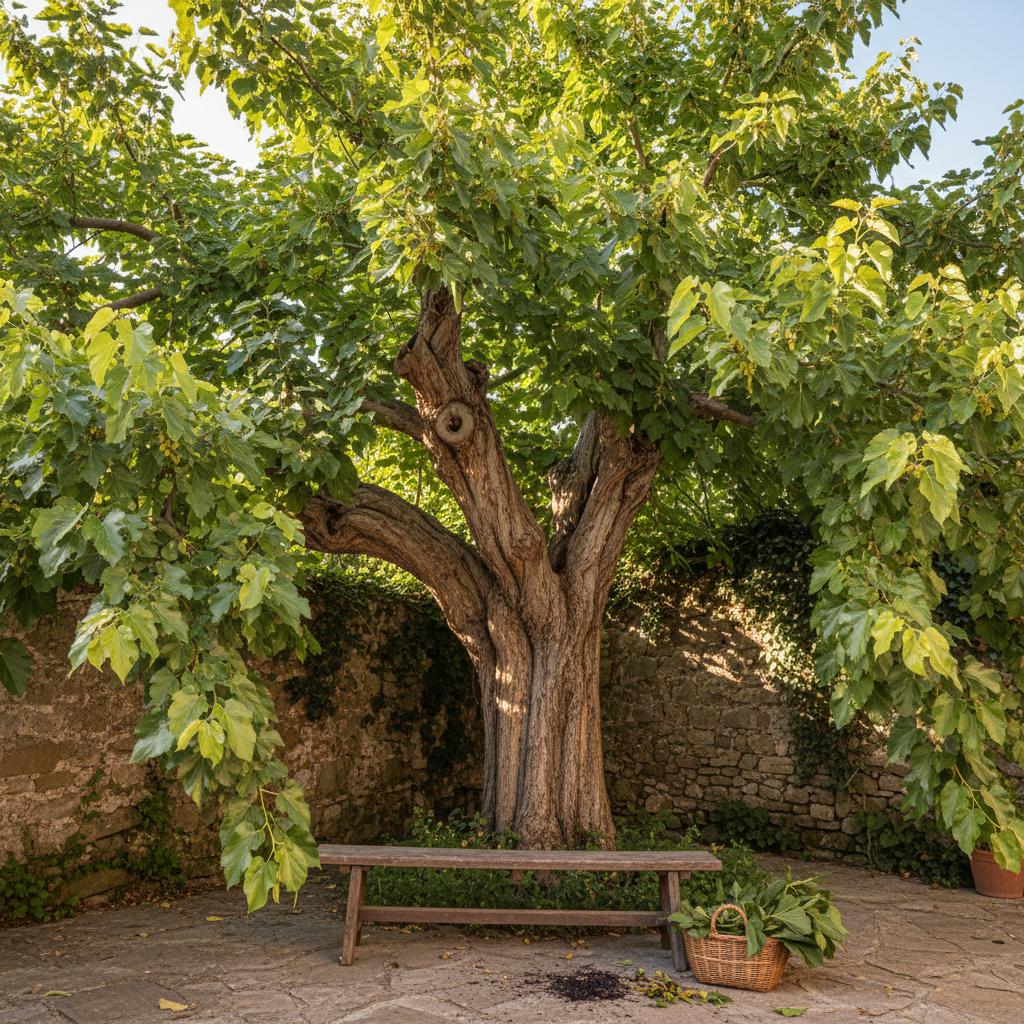
- Leaves: Alternate, simple, 5-15 cm long, highly variable in shape (often lobed on young trees, unlobed on mature trees), with serrated margins and a glossy green upper surface;
- Flowers: Small, inconspicuous greenish-yellow catkins; monoecious or dioecious, appearing in early spring;
- Fruit: A multiple fruit (syncarp) 1-2.5 cm long, resembling a blackberry, ripening from white or pink to dark purple or black;
- Bark: Light grayish-brown, developing shallow vertical fissures and broad ridges with age.
Care Guide
Water deeply once a week, especially when fruits are swelling.
Apply a balanced organic layer in early spring before new growth begins.. Mulberries generally require little to no supplemental fertilization once established.
Compost and Banana Peel Tea:Top-dress the root zone with homemade compost or water with steeped banana peel tea to support fruiting; avoid applying raw, uncomposted materials directly against the trunk to prevent rot.- Prune in late winter or early spring while the tree is fully dormant to prevent excessive sap bleeding;
- Remove dead, diseased, or crossing branches to improve air circulation;
- Thin out the canopy to allow sunlight to reach developing fruits;
- Control height by topping if harvesting fruit by hand is desired.
Toxicity
Warning: this plant may be toxic.
Pets: Non-toxic per ASPCA.
Humans: Ripe fruits are entirely safe and edible; milky sap and unripe fruits may cause mild stomach upset.
Garden Uses & Culture
Culture: In Western classical mythology, the mulberry tree is famously associated with the tragic lovers Pyramus and Thisbe from Ovid's Metamorphoses, where their blood supposedly stained the originally white mulberries dark red.
Usage: Cultivated for its edible fruits, which are used in pies, jams, and wines. The wood is durable and used for furniture and fence posts. Historically planted in the Americas to establish a silk industry.