 PlantFun
Plant Needs
Characteristics
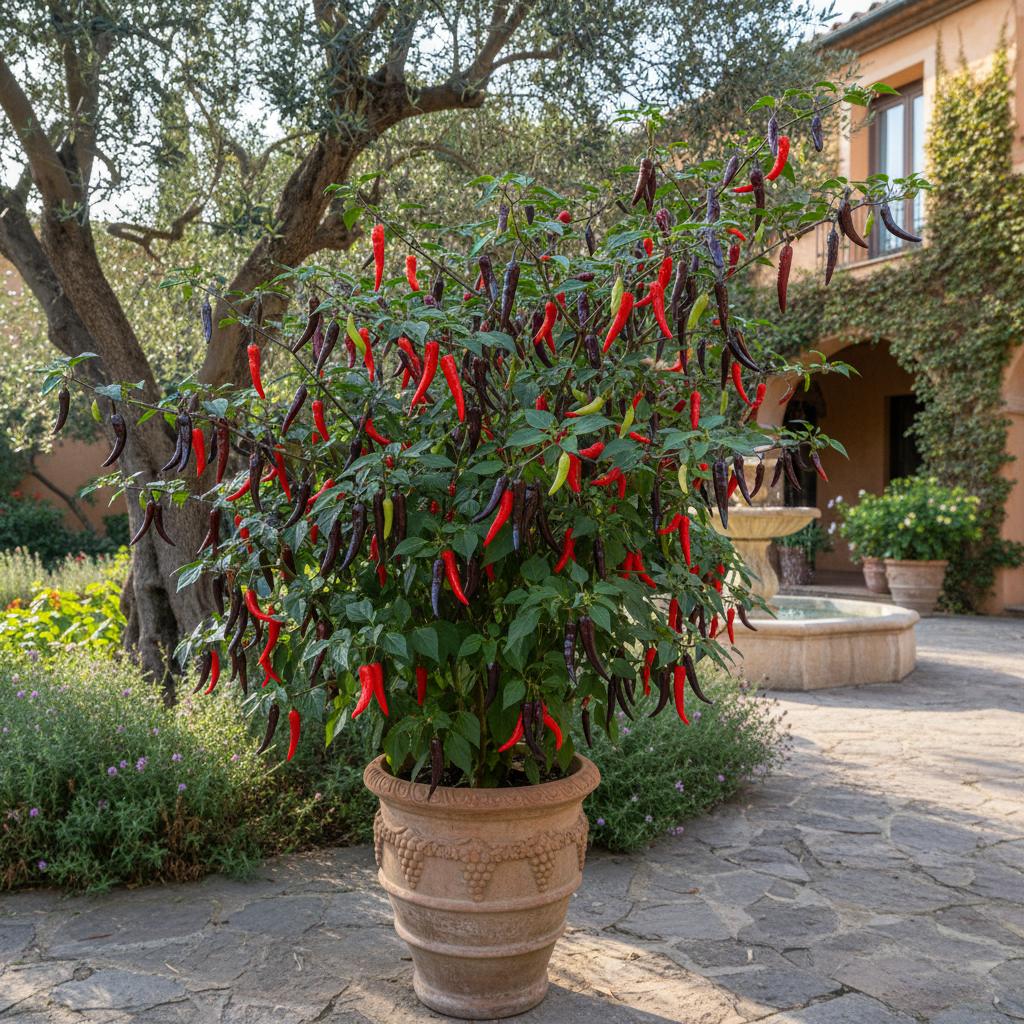
- Leaves: Ovate to lanceolate, striking dark purple to almost black, with prominent venation; color intensifies in direct sunlight.
- Flowers: Small, star-shaped, typically white with purple markings or pale purple, featuring prominent stamens.
- Fruits: Elongated, pendant pods that emerge dark purple/black and uniquely remain this color even when fully ripe and highly pungent.
- Stem: Dark purple to blackish, becoming woody at the base as the plant matures.
Care Guide
Water deeply when the top inch of soil feels dry, typically 2-3 times a week depending on heat.
Apply a balanced fertilizer to encourage strong foliar growth.. Feed regularly during the active growing season for optimal pod production.
Banana Peel Tea:Steep chopped banana peels in water for 48 hours, strain, and use the liquid to water the base of the plant. This boosts potassium levels, which is essential for chili pepper fruit development. Discard solids in compost to avoid attracting pests.- Pinch off the early growing tips when the plant is young to encourage a bushier growth habit.
- Remove any yellowing or dead leaves at the base to improve air circulation.
- Prune back excessively long branches to maintain shape and support heavy fruit loads.
Toxicity
Warning: this plant may be toxic.
Pets: Capsaicin acts as a strong irritant to the gastrointestinal tract and mucous membranes (per ASPCA guidelines for Capsicum).
Humans: Not systemically toxic, but fruits contain high levels of capsaicin which can cause severe skin, eye, and gastrointestinal irritation.
Garden Uses & Culture
Culture: Highly prized by chili pepper enthusiasts and collectors in the Americas and Europe for its unique aesthetic; it is one of the few peppers whose pods do not change color when fully ripe.
Usage: - **Culinary**: Used to add intense heat and a unique dark color to hot sauces, salsas, and chili powders. - **Ornamental**: Frequently grown in landscaping and patio containers for its striking, gothic-looking dark foliage.