 PlantFun
Plant Needs
Sunlight
Requires full sun for optimal blooming.
Watering
Water deeply once a week, allowing the topsoil to dry out between waterings.
Temperature
Highly cold tolerant, suitable for temperate climates.
Characteristics
- Leaves: Broadly ovate to obovate, often 3-lobed at the apex, with coarsely double-serrate margins;
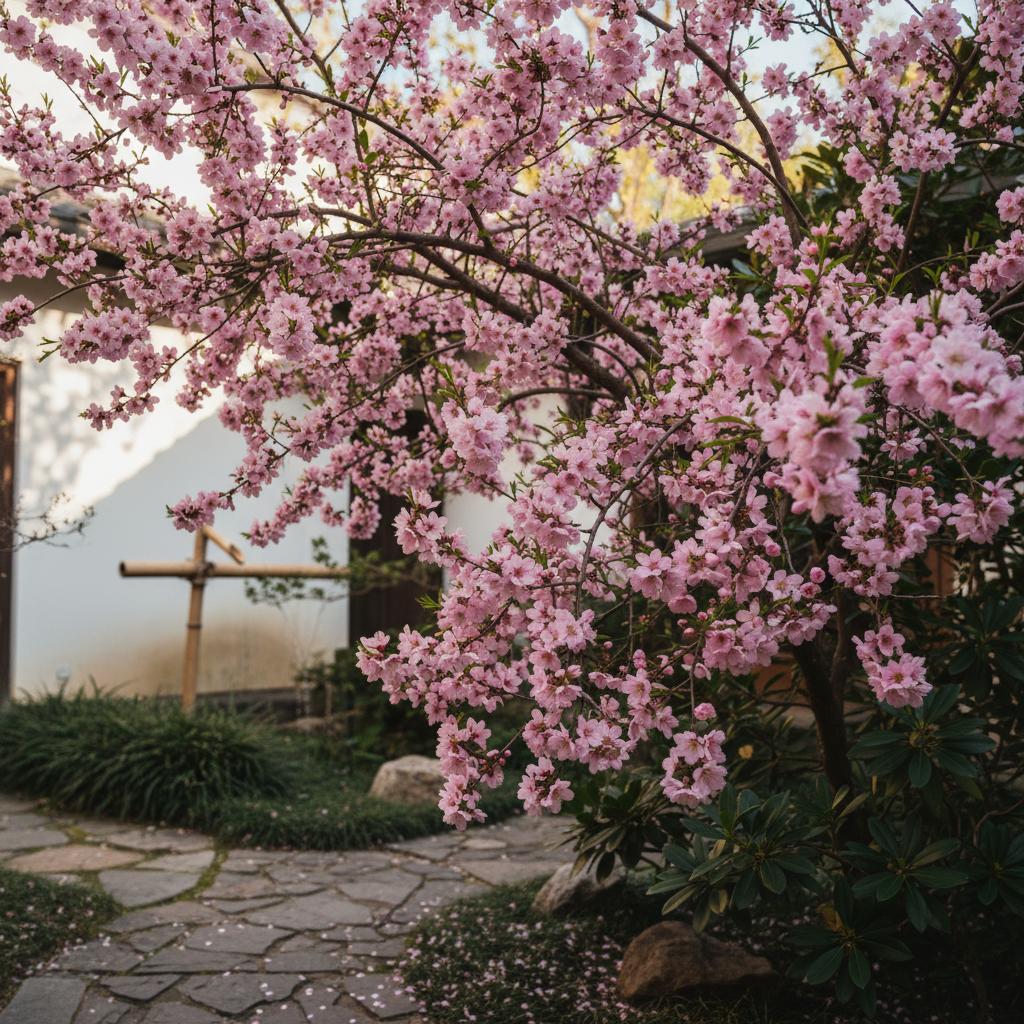
- Flowers: Solitary or in pairs, blooming before leaves, typically double, pink to pale pink;
- Bark: Brownish, smooth on young branches, becoming slightly fissured with age.
Care Guide
Watering
Water deeply once a week, more during extreme heat
Fertilization
Apply a balanced slow-release fertilizer before new growth. Fertilize annually in early spring.
Banana Peel Tea:Steep banana peels in water for 24 hours. Dilute 1:1 with water and apply to the base to encourage blooming. Avoid applying raw peels directly to prevent pests.Pruning
- Prune immediately after flowering to encourage new growth for next year's blooms;
- Remove dead, diseased, or crossing branches;
- Thin out older stems to improve air circulation.
Toxicity
Warning: this plant may be toxic.
Pets & Humans
Pets: Toxic per ASPCA due to cyanogenic glycosides (cyanide).
Humans: Seeds, stems, and leaves contain cyanogenic glycosides which can cause mild to moderate toxicity if ingested in large quantities.
Garden Uses & Culture
Culture: Often associated with spring awakening and renewal in temperate Western gardens.
Usage: Used as an ornamental shrub, specimen plant, or in mixed borders.