 PlantFun
Plant Needs
Characteristics
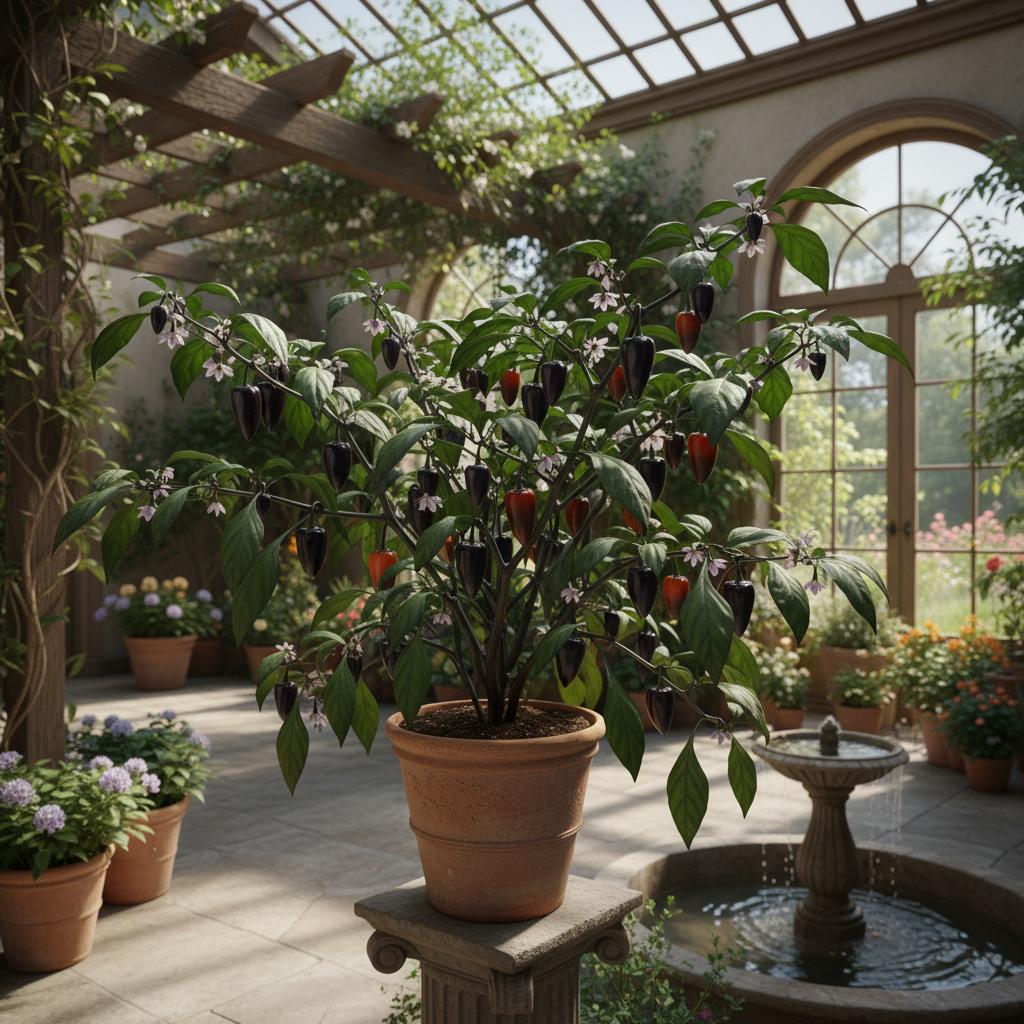
- Leaves: Dark purple to almost black, ovate to lanceolate, with prominent venation; color intensifies in direct sunlight;
- Flowers: Small, star-shaped, white with purple margins or streaks, typical of the chinense species;
- Fruit: Elongated, pendant pods that remain dark purple or black even when fully ripe, highly pungent;
- Stem: Dark purple, becoming woody at the base as the plant matures.
Care Guide
Water deeply and regularly, ensuring the soil does not dry out completely during peak heat
Apply a balanced or nitrogen-rich fertilizer to encourage strong foliar growth. Avoid over-fertilizing with nitrogen during the blooming phase, as this can lead to lush foliage but poor fruit set.
Banana Peel Tea:Steep chopped banana peels in water for 24-48 hours, strain, and use the liquid to water the base of the plant. This boosts potassium levels for better fruit development. Discard solids in compost to avoid attracting pests.- Pinch off early flower buds to encourage a bushier, stronger plant structure;
- Remove any dead, diseased, or yellowing leaves to improve air circulation;
- Prune back lightly after the main harvest to maintain shape and encourage new growth.
Toxicity
Warning: this plant may be toxic.
Pets: Toxic (per ASPCA); ingestion of fruits or leaves can cause oral and gastrointestinal irritation.
Humans: Fruits contain high levels of capsaicin, which can cause severe skin and eye irritation upon contact, and gastrointestinal discomfort if consumed in excessive amounts.
Garden Uses & Culture
Culture: Discovered in a home garden in Brazil, it has become highly prized among chili enthusiasts in the Americas and Europe for being one of the few peppers whose pods remain dark purple when fully ripe.
Usage: Used as a striking ornamental plant in edible landscapes; fruits are used in hot sauces and spicy culinary dishes, offering a heat level comparable to a habanero.