 PlantFun
Plant Needs
Characteristics
- Leaves: Evergreen, alternate, narrowly elliptic to lanceolate, 2-4 cm long, glossy dark green above, margins finely serrate;
- Flowers: Dense corymbs of small, white, 5-petaled flowers with numerous stamens, blooming profusely in late spring;
- Stems: Woody branches armed with sharp, stout thorns; bark is dark grayish-brown;
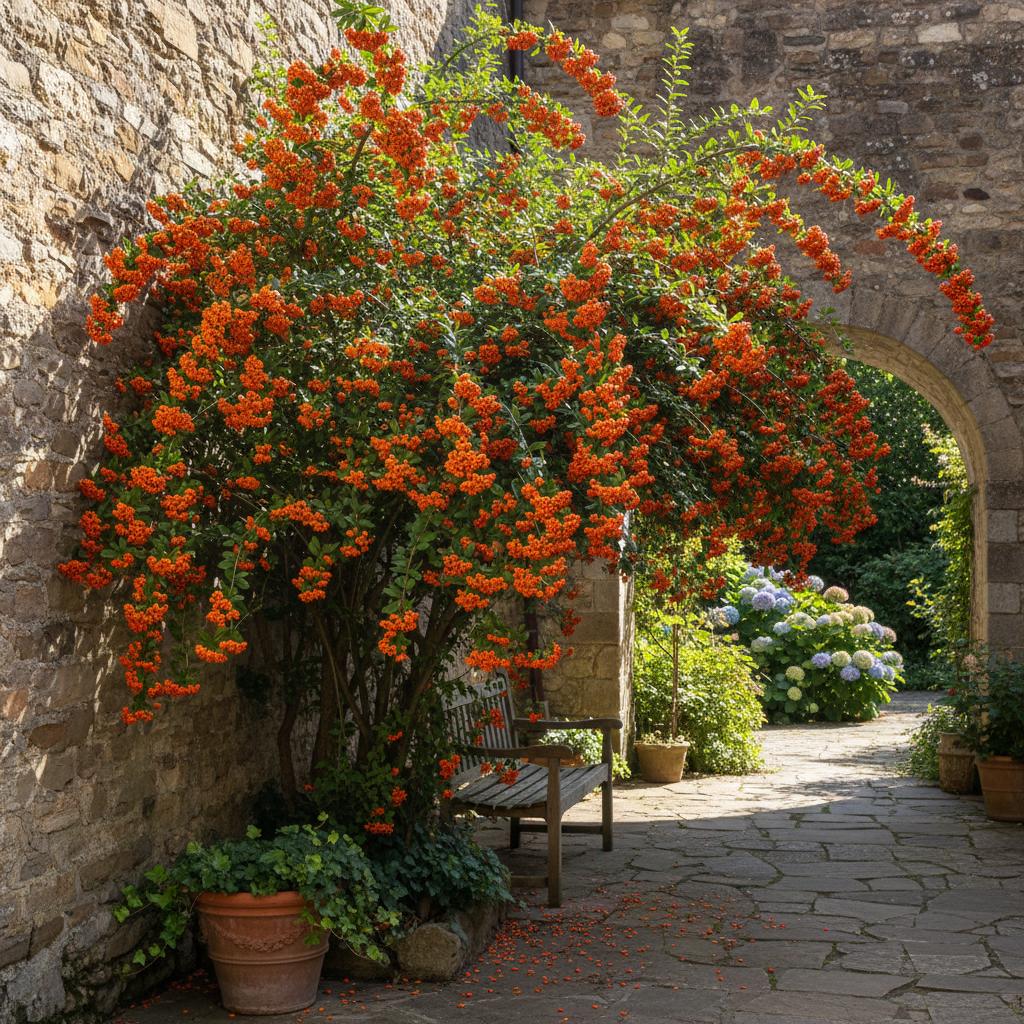
- Fruit: Clusters of small, bright red or orange pomes (berries) that persist through autumn and winter.
Care Guide
Water deeply when the top 2 inches of soil become dry, especially during the first growing season.
Apply a balanced, slow-release fertilizer before new growth begins.. Avoid excessive nitrogen, which promotes leafy growth at the expense of flowers and berries.
Banana Peel Tea:Steep chopped banana peels in water for 24 hours. Dilute the liquid 1:1 with water and apply to the base of the plant to support prolific flowering and fruiting. Discard peels in compost to avoid foul odors.- Timing: Prune in late winter or early spring before new growth starts;
- Safety: Always wear thick, puncture-resistant gloves to protect against sharp thorns;
- Technique: Remove dead, diseased, or crossing branches to improve air circulation;
- Fruiting: Shape carefully, keeping in mind that flowers and fruits form on the previous year's wood (old wood).
Toxicity
Warning: this plant may be toxic.
Pets: Non-toxic per ASPCA. Thorns pose a risk of mechanical injury.
Humans: Berries are technically edible but bitter raw; seeds contain trace cyanogenic glycosides but are generally safe unless consumed in massive, crushed quantities. Thorns can cause mechanical injury.
Garden Uses & Culture
Culture: In Western landscaping, Firethorn is frequently utilized as an impenetrable security hedge or elegantly espaliered against brick walls, symbolizing protection, endurance, and boundaries.
Usage: Ornamental landscaping, barrier hedges, espalier, and wildlife gardens (berries are a crucial winter food source for birds).