 PlantFun
Plant Needs
Characteristics
- Leaves: Alternate, ovate to elliptic, 2-5 cm long, margins entire, covered with appressed hairs (strigose) on both surfaces;
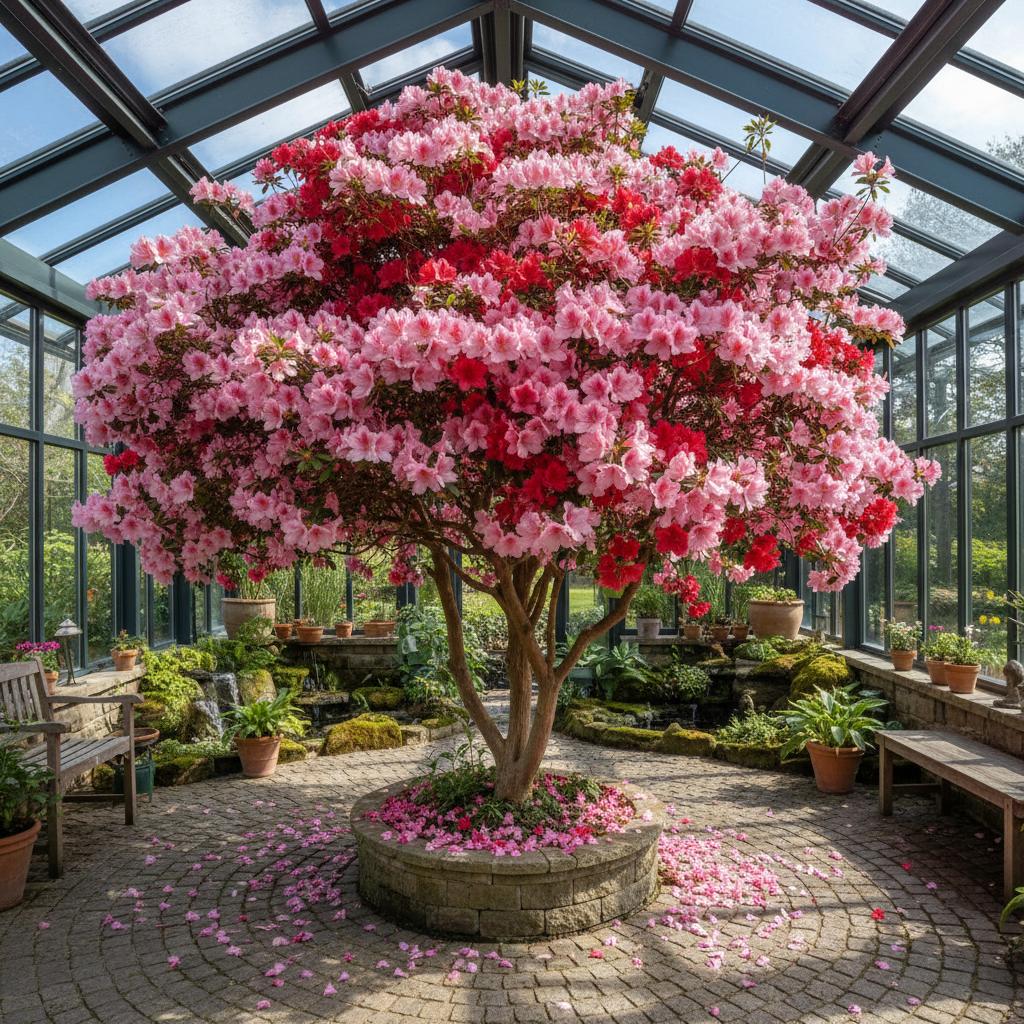
- Flowers: Funnel-shaped to bell-shaped, 4-6 cm across, borne in clusters of 2-6 at branch terminals, colors range from red, pink, to white;
- Bark: Grayish-brown, relatively smooth but becoming slightly scaly on older stems;
- Stems: Young shoots are densely covered with flattened, brown or silvery hairs.
Care Guide
Water deeply and regularly to keep soil evenly moist, especially during bud formation and blooming.
Apply an acid-forming organic fertilizer immediately after the blooming period ends.. Avoid over-fertilizing, as their shallow root systems are easily burned by excess salts.
Coffee Grounds:Sprinkle a thin layer of used, cooled coffee grounds around the drip line to gently boost soil acidity and provide mild nitrogen. Do not pile thickly, as this can mold and block water penetration.- Prune immediately after flowering finishes to avoid cutting off next year's flower buds;
- Remove dead, diseased, or crossing branches to improve air circulation;
- Deadhead spent blooms carefully by pinching them off to direct energy into vegetative growth.
Toxicity
Warning: this plant may be toxic.
Pets: Toxic per ASPCA; ingestion of even a few leaves can cause severe poisoning, cardiovascular collapse, and death.
Humans: Highly toxic due to grayanotoxins; ingestion can cause severe cardiovascular and gastrointestinal issues.
Garden Uses & Culture
Culture: In the Victorian language of flowers, the Rhododendron symbolizes "danger" or "beware" due to its well-known toxicity, though it was also heavily prized in 19th-century European estate gardens as a symbol of wealth and elegance.
Usage: Widely used in foundation plantings, woodland gardens, shaded borders, and as potted ornamental plants or bonsai.