 PlantFun
Plant Needs
Sunlight
Requires full sun for optimal stalk development and grain yield.
Watering
Highly drought-tolerant once established; water moderately during early vegetative growth.
Temperature
Thrives in warm weather; highly sensitive to frost.
Characteristics
- Leaves: Linear-lanceolate, 15 to 45 cm long, with rough margins and a prominent midrib;
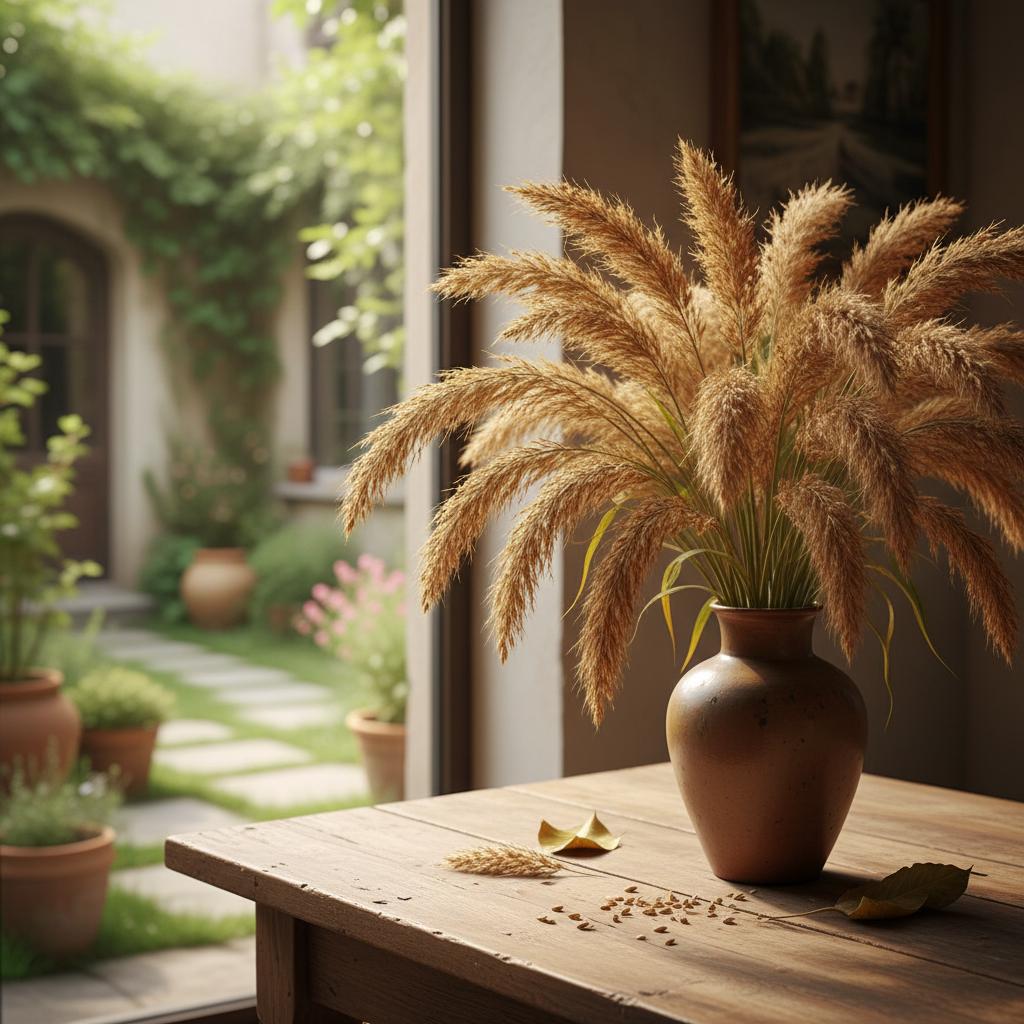
- Inflorescence: Dense, bristly, drooping panicle, 5 to 30 cm long, turning yellow, brown, or purplish at maturity;
- Stems: Erect, stout, and jointed, tillering from the base;
- Fruit: Small, oval grains tightly enclosed in hulls, commonly harvested for seed.
Care Guide
Watering
Water deeply but infrequently, allowing the topsoil to dry out completely between waterings.
Fertilization
Apply a balanced organic amendment at planting to encourage strong root and shoot growth.. Requires minimal fertilization; excessive nitrogen can cause the tall stems to lodge (fall over).
Aquarium Water:Use old aquarium water during routine changes to provide gentle, natural nitrogen for vegetative growth. Ensure water has no added chemical medications or high salt content.Pruning
- Harvesting: Cut the seed heads once they turn brown and dry out in late summer or autumn;
- Cleanup: Remove and compost the dead stalks at the end of the growing season;
- Weed Control: Thin out dense seedlings early in the season to provide adequate air circulation.
Toxicity
Warning: this plant may be toxic.
Pets & Humans
Pets: Non-toxic per ASPCA guidelines for true grasses; safe if nibbled.
Humans: Non-toxic; the grains are widely consumed as food.
Garden Uses & Culture
Culture: Cultivated in Europe since the Bronze Age, it became a staple forage crop and birdseed ingredient in the Americas during the 19th century.
Usage: Widely used as birdseed, livestock fodder, and occasionally grown as an ornamental grass for its attractive, drooping seed heads.