 PlantFun
Plant Needs
Characteristics
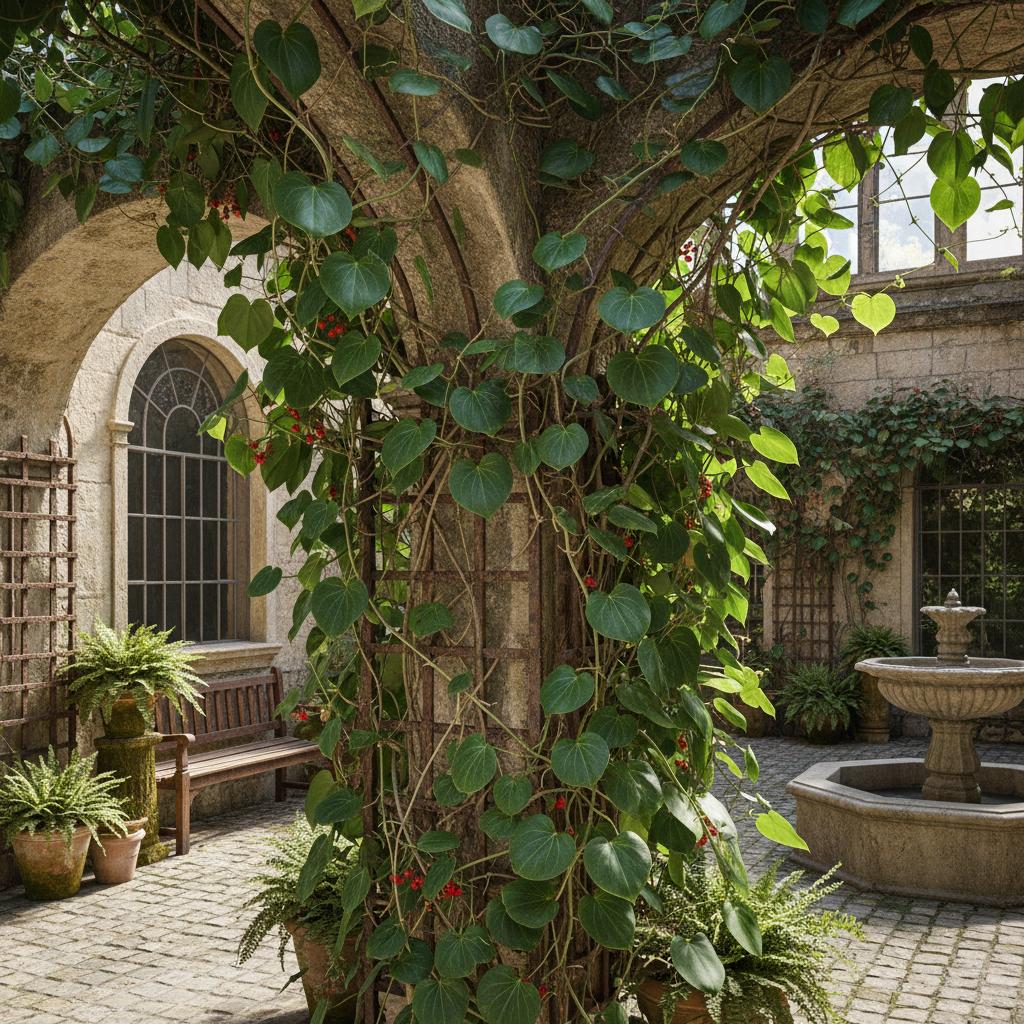
- Leaves: Alternate, tough, leathery, heart-shaped to hastate, with prickly margins and midribs;
- Flowers: Small, yellowish-white to greenish, fragrant, arranged in axillary umbels;
- Stems: Climbing, zigzagging, armed with sharp, curved prickles;
- Fruit: Globose berries, ripening from green to red, and finally black.
Care Guide
Water moderately, allowing the topsoil to dry out completely between waterings.
Apply a balanced organic compost or mild fertilizer once at the start of the growing season.. Requires minimal feeding; over-fertilizing can lead to excessive, unmanageable vegetative growth.
Banana Peel Tea:Soak chopped banana peels in water for 24 hours. Strain and use the liquid to water the base of the plant. Avoid leaving solid peels on the soil to prevent pests.- Prune in late winter or early spring to control size and shape;
- Remove dead, damaged, or overly tangled stems to improve air circulation;
- Always wear thick, puncture-resistant gloves when pruning due to the sharp prickles.
Toxicity
Warning: this plant may be toxic.
Pets: Non-toxic per ASPCA guidelines for the Smilax genus.
Humans: Generally non-toxic, though berries are unpalatable and may cause mild stomach upset if consumed in large quantities.
Garden Uses & Culture
Culture: In Mediterranean folklore, its impenetrable thorny thickets are often associated with boundaries, protection, and the untamed wilderness.
Usage: Historically, the roots of various Smilax species were used to make sarsaparilla drinks. In landscaping, it is used as an impenetrable barrier or ornamental climber in native gardens.