 PlantFun
Plant Needs
Characteristics
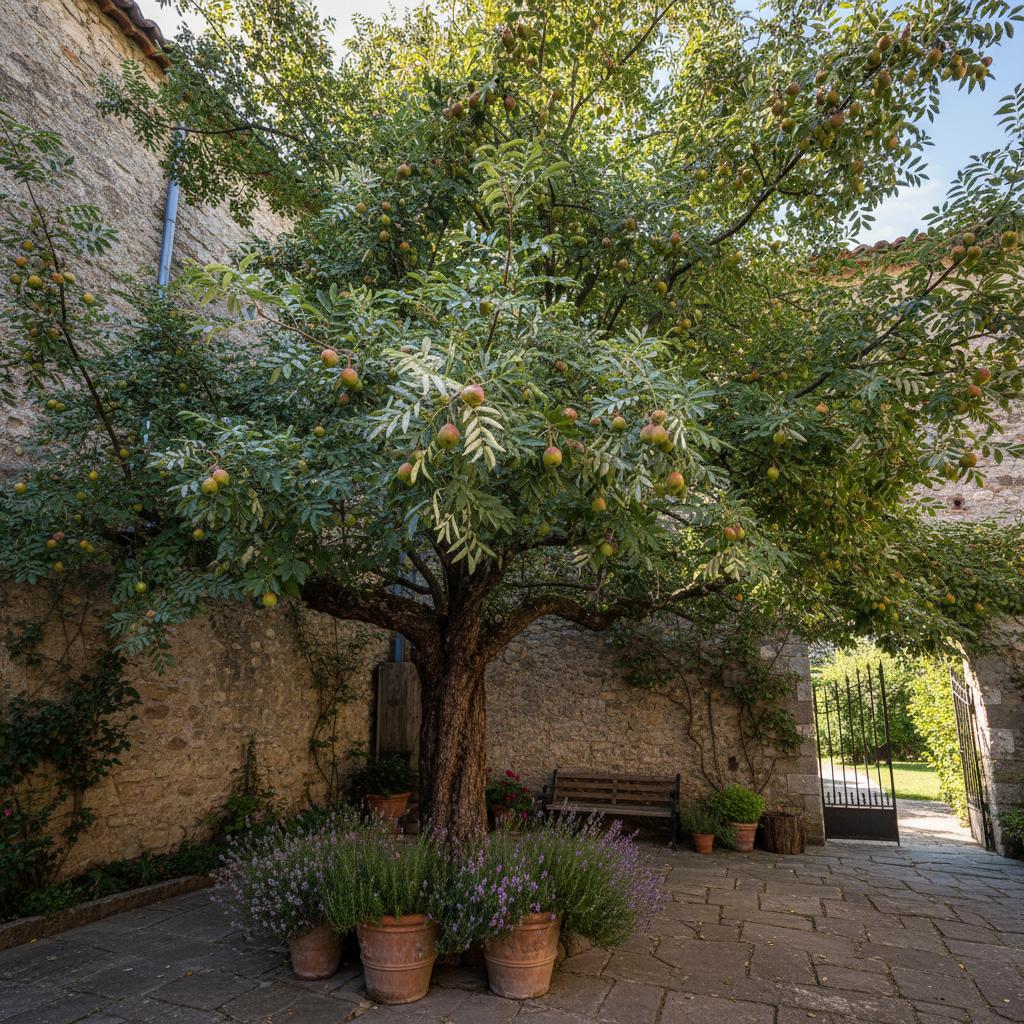
- Leaves: Pinnately compound, 15 - 25 cm long, with 13 - 21 oblong to lanceolate leaflets, margins sharply serrate, downy beneath when young;
- Flowers: Borne in complex corymbs 10 - 14 cm across, individual flowers 13 - 18 mm in diameter with five white petals;
- Fruits: Pome, 2 - 3 cm long, green-brown tinged with red on the sunlit side, pear-shaped or apple-shaped, highly astringent until bletted (overripe);
- Bark: Brown and smooth on young trees, becoming deeply fissured and scaly into rectangular plates on older specimens.
Care Guide
Water deeply once a week during dry spells for young trees; mature trees rely on rainfall
Apply a layer of organic compost or mulch around the base. Avoid heavy nitrogen fertilization which can promote weak, disease-prone growth.
Eggshell and Banana Peel Mix:Crush dried eggshells finely and chop banana peels, burying them shallowly around the drip line. This provides slow-release calcium (ideal for its calcareous soil preference) and potassium for fruiting. Avoid placing directly against the trunk to prevent rot.- Prune in late winter or early spring while the tree is dormant;
- Remove dead, diseased, or crossing branches to maintain an open canopy;
- Retain a strong central leader when the tree is young;
- Avoid heavy pruning, as it heals slowly and is susceptible to fungal infections in large wounds.
Toxicity
Warning: this plant may be toxic.
Pets: Non-toxic per general Rosaceae fruit flesh safety guidelines; seeds should be avoided but flesh is safe.
Humans: Fruits are edible after bletting; seeds contain trace cyanogenic glycosides but are generally harmless unless chewed in massive quantities.
Garden Uses & Culture
Culture: Historically significant in Europe, its extremely dense wood was prized for making wooden screws for wine presses, while its fruits were fermented into a traditional cider-like drink called "cormé" in France.
Usage: Wood is used for high-quality veneers, furniture, and tool handles; bletted fruits are used to make jams, jellies, and alcoholic beverages.