 PlantFun
Plant Needs
Characteristics
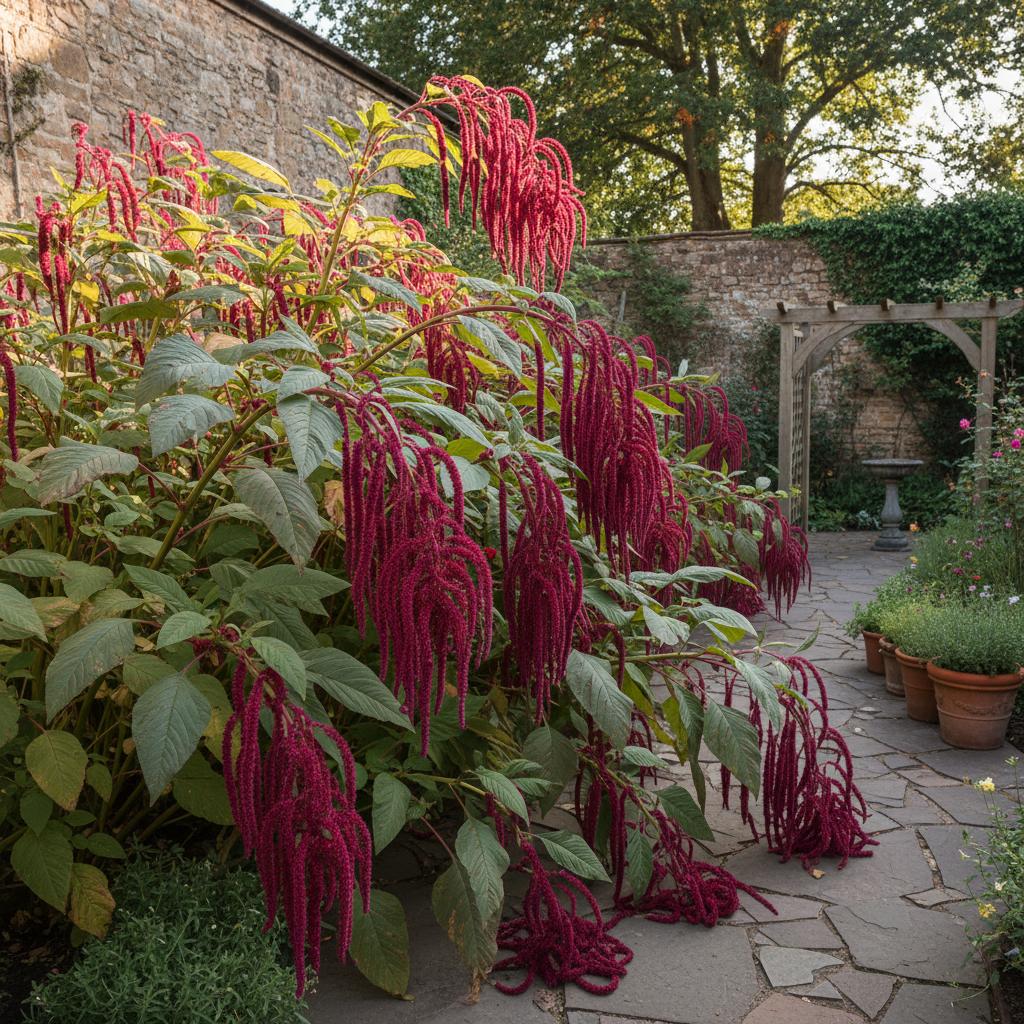
- Leaves: Alternate, ovate to lanceolate, light green to purplish, 5 - 15 cm long, with entire margins;
- Flowers: Tiny, petal-less, densely packed in long, drooping, tassel-like terminal panicles, typically bright red or crimson;
- Stem: Stout, erect, often reddish, branching, capable of supporting heavy floral spikes;
- Seeds: Small, round, pale pink to yellowish-white, produced in massive quantities within the tassels.
Care Guide
Water deeply when the top inch of soil feels dry, ensuring good drainage.
Apply a balanced fertilizer once after planting to encourage establishment.. Avoid over-fertilizing, as it can weaken the stems and reduce the vibrancy of the blooms.
Banana Peel Tea:Steep chopped banana peels in water for 24 hours. Dilute 1:1 with water and apply to soil to boost blooming. Discard peels in compost to avoid pests.- Pinch back young tips early in the season to encourage bushier growth and multiple flower spikes;
- Remove dead or damaged leaves near the base to maintain airflow and prevent rot;
- Deadhead spent flower tassels if self-seeding is not desired, as it is a prolific seeder;
- Stake taller plants if heavy tassels cause the stems to lean.
Toxicity
Warning: this plant may be toxic.
Pets: Non-toxic to cats per ASPCA guidelines.
Humans: Generally safe and edible; seeds are a pseudocereal and cooked leaves are nutritious, though raw leaves contain oxalates which should be consumed in moderation.
Garden Uses & Culture
Culture: In Victorian flower language, love-lies-bleeding represents hopeless love or desertion, a dramatic symbolism inspired by its drooping, blood-red tassels.
Usage: Widely grown as a striking ornamental border plant; historically and currently cultivated for its highly nutritious, gluten-free seeds (amaranth grain) and edible leaves.