 PlantFun
Plant Needs
Characteristics
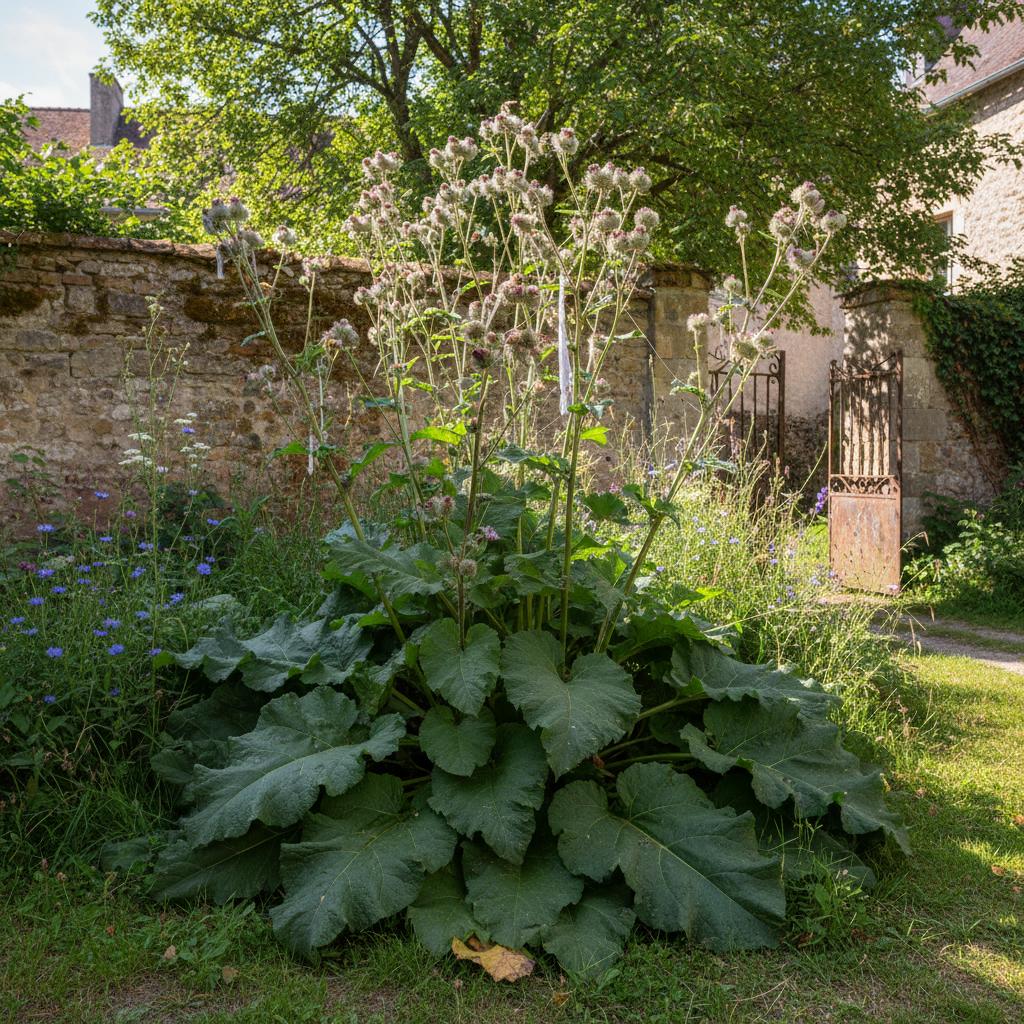
- Leaves: Large, alternate, cordate or ovate, up to 50 cm long, with wavy margins and woolly, pale undersides;
- Flowers: Purple, tubular florets clustered in globular capitula (flower heads), surrounded by stiff, hooked bracts forming a bur;
- Stem: Stout, grooved, highly branched, often tinged with red or purple;
- Root: Thick, fleshy taproot that can grow up to 1 meter deep, brownish exterior and creamy white interior.
Care Guide
Water deeply to encourage downward root growth, keeping soil moderately moist.
Apply a balanced organic amendment to support rapid vegetative growth.. Burdock is a heavy feeder but generally thrives in average soils without supplemental synthetic fertilizers.
Banana Peel and Coffee Ground Tea:Steep chopped banana peels and a small amount of used coffee grounds in water for 2-3 days. Strain and dilute 1:1 with water. Pour around the base to support robust root and foliage growth. Avoid uncomposted raw scraps directly on the soil.- Cut off flower stalks before they go to seed to prevent aggressive spreading;
- Remove dead or damaged lower leaves to improve air circulation;
- If growing for culinary root harvest, do not let the plant flower (harvest in the first autumn or early second spring).
Toxicity
Warning: this plant may be toxic.
Pets: Non-toxic per ASPCA; however, burs can become severely tangled in fur causing physical distress.
Humans: Generally safe and widely consumed as a root vegetable; burs can cause minor physical skin irritation.
Garden Uses & Culture
Culture: In 1941, Swiss engineer George de Mestral examined the burs of burdock that had attached to his dog's fur and his clothes under a microscope. The hook-and-loop structure he observed directly inspired his invention of Velcro.
Usage: - **Culinary**: The crisp, sweet taproot is a popular vegetable (known as 'gobo'); - **Medicinal**: Traditionally used in Western herbalism as a blood purifier and diuretic; - **Ecological**: Flowers are highly attractive to bees and butterflies.