 PlantFun
Plant Needs
Characteristics
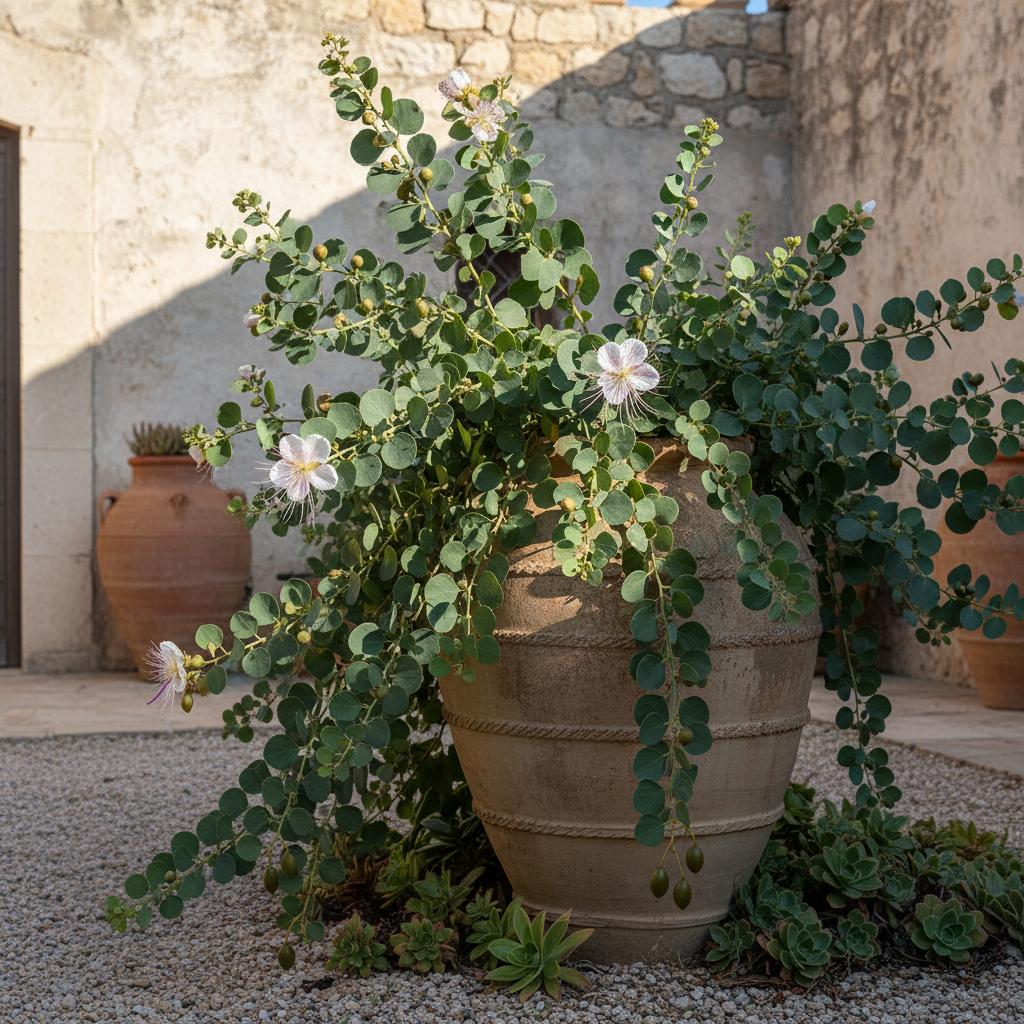
- Leaves: Alternate, round to ovate, thick, fleshy, and semi-succulent, often with a pair of curved stipular spines at the base of the petiole;
- Flowers: Striking and sweet-scented, 5-7 cm across, with four white to pinkish-white petals and numerous prominent, long violet-purple stamens;
- Fruit: An oblong, fleshy berry (caper berry) that bursts open when ripe to reveal numerous seeds embedded in a purplish-red pulp;
- Stems: Trailing, sprawling, or pendulous, woody at the base and herbaceous at the tips.
Care Guide
Water deeply but infrequently, allowing the substrate to dry completely.
Apply a light application of organic compost or mild fertilizer.. Requires very little fertilization; thrives in nutrient-poor soils.
Eggshell Powder:Crush thoroughly washed and dried eggshells into a fine powder and mix into the topsoil. This provides a slow-release calcium source and slightly raises soil pH, which capers love. Avoid using unwashed shells to prevent odors and pests.- Prune heavily in late winter or early spring while the plant is dormant;
- Cut back stems to the base (leaving short stumps) to encourage vigorous new growth, as flowers only form on new wood;
- Remove any dead, diseased, or crossing branches to maintain good air circulation;
- Wear thick gloves when pruning to protect hands from the sharp stipular spines.
Toxicity
Warning: this plant may be toxic.
Pets: Non-toxic to cats; no known toxicity per ASPCA guidelines.
Humans: Non-toxic; the unopened flower buds (capers) and fruits (caper berries) are widely consumed as food.
Garden Uses & Culture
Culture: Deeply embedded in Mediterranean culinary traditions, the caper has been harvested from the wild since antiquity. It is a staple in Italian, Greek, and Spanish cuisines, symbolizing the rugged resilience of the Mediterranean landscape.
Usage: - **Culinary**: Unopened flower buds are pickled in salt or vinegar to make capers; mature fruits are pickled as caper berries. - **Ornamental**: Excellent for xeriscaping, rock gardens, or trailing over dry retaining walls. - **Ecological**: Deep root systems help prevent soil erosion on dry, rocky slopes.