 PlantFun
Plant Needs
Characteristics
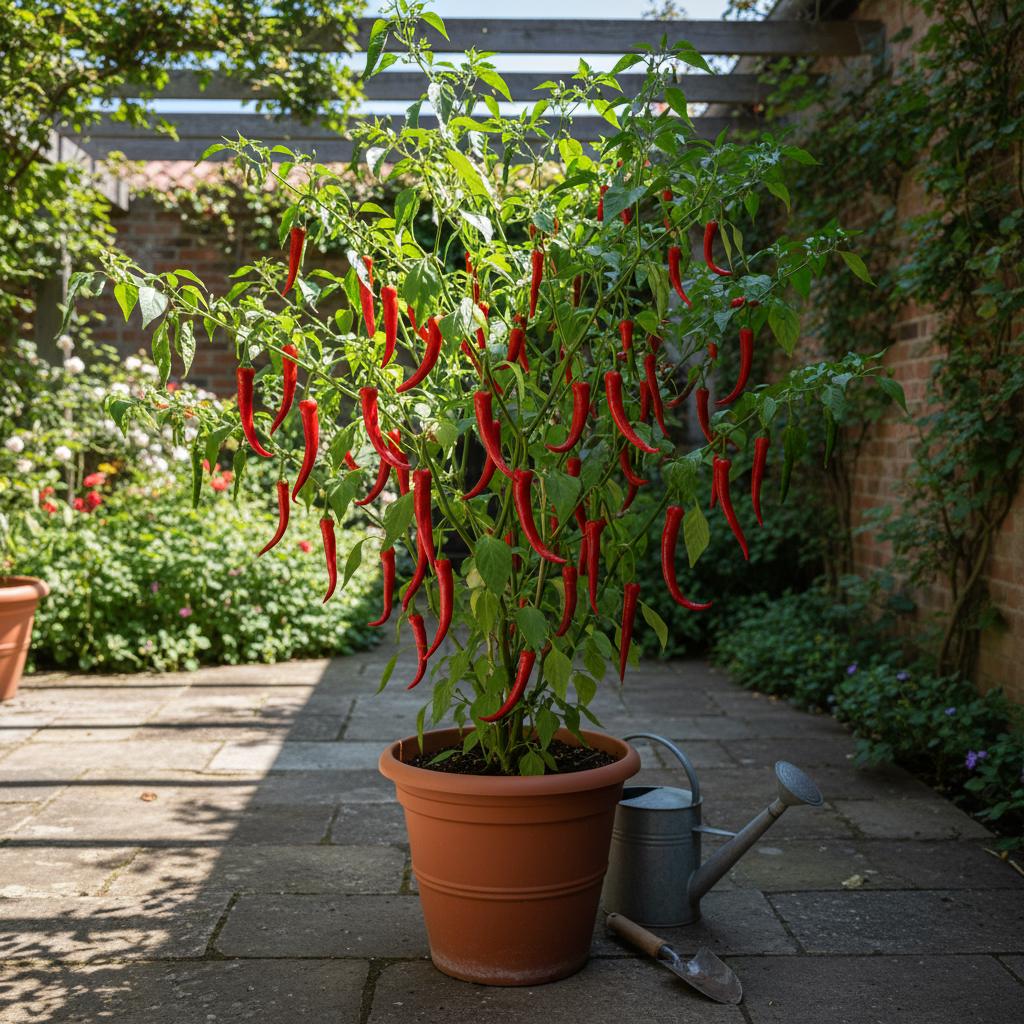
- Leaves: Ovate to lanceolate, alternate, 4 - 12 cm long, with smooth margins and a vibrant green color;
- Flowers: Small, star-shaped, usually solitary, with 5 to 6 white or greenish-white petals and prominent stamens;
- Fruit: Elongated, tapering, often curved berries that ripen from green to bright red, containing high levels of capsaicin;
- Stem: Woody at the base, branching extensively, green to purplish in color.
Care Guide
Water deeply and consistently, ensuring the soil remains moist but not waterlogged.
Apply a balanced fertilizer to encourage leafy growth.. Avoid high-nitrogen fertilizers once flowers appear, as this promotes foliage over fruit.
Banana Peel Tea:Steep chopped banana peels in water for 24-48 hours. Dilute 1:1 with water and apply to the base to boost fruit production. Discard solids in compost to avoid attracting pests.- Pinch off early flowers on young plants to encourage stronger root and vegetative growth;
- Prune lower branches to improve air circulation and prevent soil-borne diseases;
- Remove any yellowing, dead, or diseased foliage promptly.
Toxicity
Warning: this plant may be toxic.
Pets: Toxic (per ASPCA general Solanaceae/Capsicum guidelines); causes oral and gastrointestinal irritation.
Humans: Capsaicin causes burning sensation on skin and eyes; ingestion of large amounts may cause gastrointestinal distress.
Garden Uses & Culture
Culture: Introduced to Europe by Christopher Columbus in the late 15th century, it quickly became a crucial, affordable spice in global trade, heavily influencing Western culinary traditions and herbalism.
Usage: - **Culinary**: Used fresh, dried, or powdered to add heat and flavor to a vast array of dishes; - **Medicinal**: Capsaicin is extracted for topical creams to relieve muscle and joint pain; - **Agricultural**: Used as a natural pest deterrent in gardens.