 PlantFun
Plant Needs
Characteristics
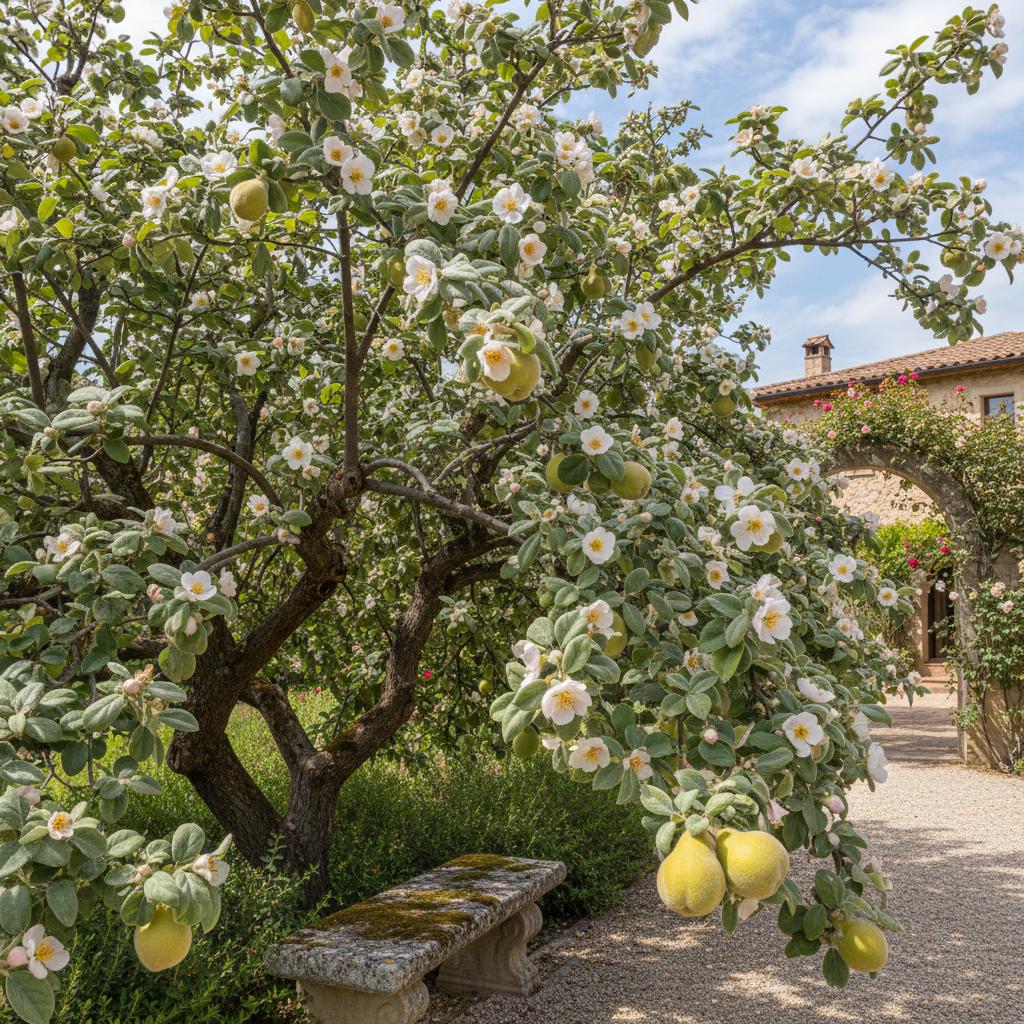
- Leaves: Alternate, simple, ovate to elliptic, 6-11 cm long, densely covered with fine white pubescence on the underside;
- Flowers: Solitary, large (up to 5 cm across), with five white or pale pink petals, appearing after the leaves have unfurled;
- Fruit: Large pome, pear-shaped or apple-shaped, turning bright golden-yellow when mature, highly aromatic, covered in a fine fuzz that rubs off;
- Bark: Thin, grayish-brown, flaking in small patches on older trunks.
Care Guide
Water deeply once a week, increasing frequency during prolonged dry or hot spells while fruit is developing.
Apply a balanced organic fertilizer or compost around the drip line before new growth begins.. Annual spring feeding is usually sufficient for established trees.
Banana Peel and Wood Ash Blend:Bury chopped banana peels and a small handful of cooled wood ash in the soil around the drip line to support flower and fruit development. Avoid applying ash if your soil is already highly alkaline.- Winter Pruning: Prune in late winter while the tree is dormant to remove dead, diseased, or crossing branches;
- Thinning: Thin out the center of the canopy to improve light penetration and air circulation;
- Sucker Removal: Promptly remove any suckers growing from the base or roots, especially if the tree is grafted;
- Fruit Thinning: Thin young fruits in early summer if the crop is excessively heavy to prevent branch breakage and improve fruit size.
Toxicity
Warning: this plant may be toxic.
Pets: Non-toxic per ASPCA.
Humans: Flesh is edible (usually cooked). Seeds contain trace cyanogenic glycosides but are generally harmless unless chewed and consumed in massive quantities.
Garden Uses & Culture
Culture: In ancient Greek mythology, the quince was sacred to Aphrodite and symbolized love, marriage, and fertility. It was traditionally given as a wedding gift and is believed by some historians to be the "golden apple" awarded by Paris.
Usage: The hard, tart fruits are exceptionally high in pectin and are widely used to make jams, jellies, pastes (such as membrillo), and marmalades. The tree is also frequently used as a dwarfing rootstock for pear trees.