 PlantFun
Plant Needs
Characteristics
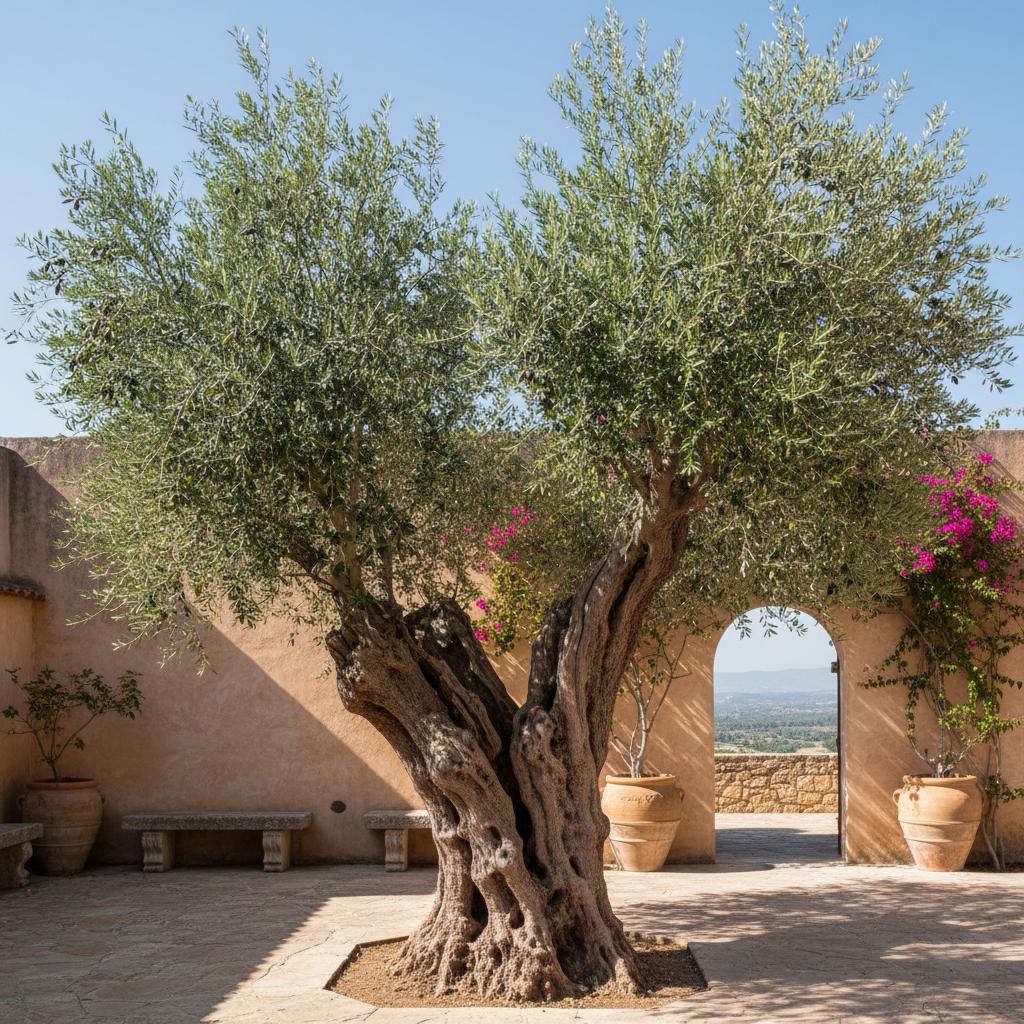
- Leaves: Evergreen, opposite, lanceolate to oblong, 4-10 cm long, dark green above and densely silvery-scurfy below;
- Flowers: Small, feathery, creamy white, borne in axillary racemes or panicles;
- Fruit: Drupe, green turning purplish-black when ripe, rich in oil, with a hard central pit;
- Bark: Smooth and pale gray when young, becoming gnarled, twisted, and deeply fissured with age.
Care Guide
Water deeply once every 1 to 2 weeks during active growth and fruit development.
Apply a balanced fertilizer just before the blooming period.. Avoid excessive nitrogen, which promotes foliage growth at the expense of fruit production.
Coffee Grounds and Eggshells:Mix used coffee grounds and crushed, dried eggshells into the topsoil around the drip line to provide gentle nitrogen and calcium. Avoid applying directly against the trunk to prevent rot.- Prune in late winter or early spring before new growth begins;
- Remove suckers from the base and water sprouts from the main branches;
- Thin out the canopy to allow sunlight and air to reach the center, reducing disease risk;
- Remove dead, diseased, or crossing branches to maintain a strong structural framework.
Toxicity
Warning: this plant may be toxic.
Pets: Non-toxic per ASPCA.
Humans: Non-toxic; fruits are edible after curing.
Garden Uses & Culture
Culture: The olive tree is a universal symbol of peace, wisdom, and abundance in Western antiquity, deeply rooted in Greek mythology (associated with Athena) and biblical traditions (the dove returning to Noah's Ark with an olive branch).
Usage: - **Culinary**: Dual-purpose cultivar used for both high-quality olive oil extraction and table olives (often cured as black olives); - **Landscaping**: Popular ornamental tree in xeriscaping and Mediterranean-style gardens due to its striking gnarled trunk and silvery foliage; - **Woodworking**: The hard, beautifully grained wood is prized for carving and making utensils.