 PlantFun
Plant Needs
Characteristics
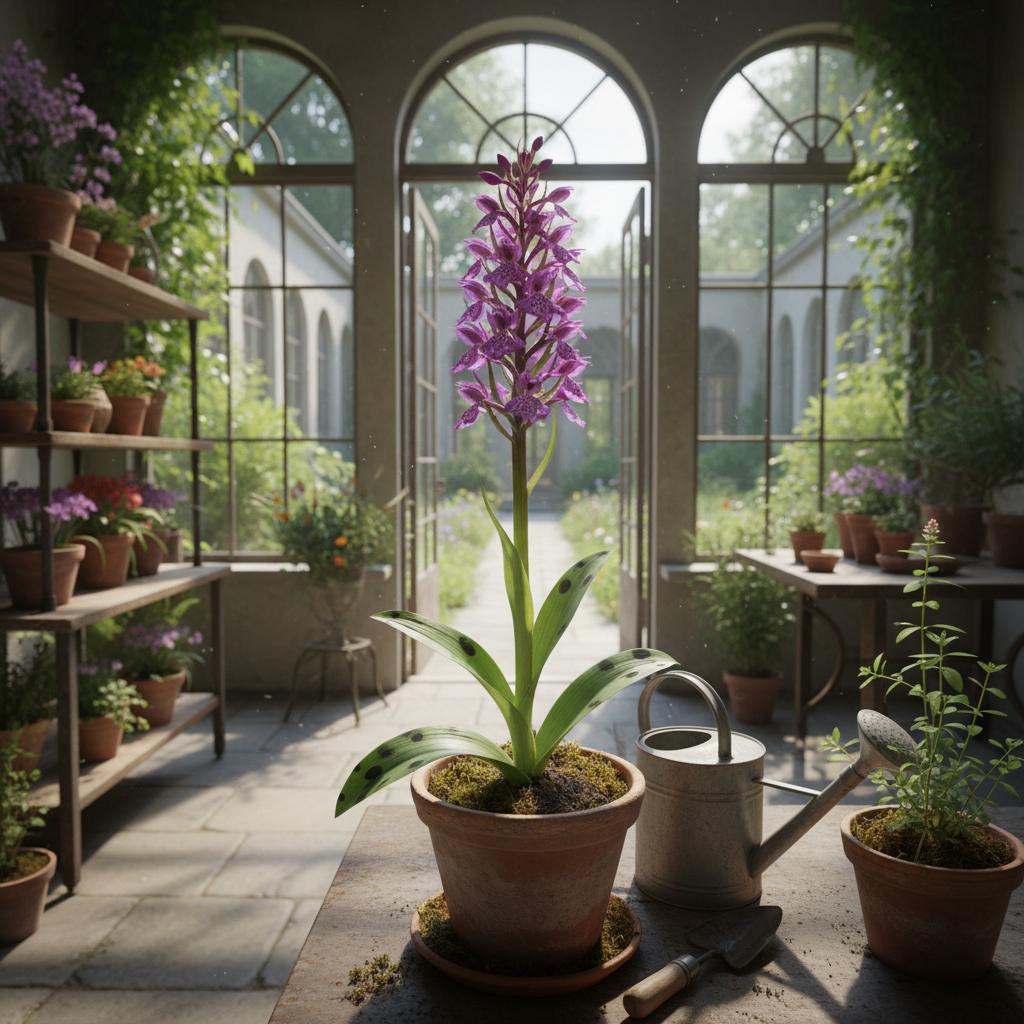
- Leaves: Basal rosette of broad, lanceolate to ovate leaves, typically marked with distinct dark purple or blackish spots, though occasionally unspotted;
- Flowers: Dense cylindrical inflorescence bearing 10 to 50 purplish-pink flowers; labellum is three-lobed with a pale, spotted center and a stout, upward-pointing spur;
- Stem: Erect, robust, green at the base and often flushing purplish towards the apex;
- Roots: Underground system consists of two rounded, fleshy tubers.
Care Guide
Keep soil evenly moist in spring; reduce watering significantly in summer as the plant goes dormant.
Apply a very weak, natural top-dressing if soil is poor, but generally unnecessary.. Thrives in natural, unfertilized soils; relies on symbiotic fungi rather than added nutrients.
Mild Eggshell Tea:Steep crushed, rinsed eggshells in water for a few days. Use sparingly to provide a slight calcium boost for chalk-loving orchids. Avoid high salts and uncomposted organic matter.- Allow the flower spike to set seed if desired, or remove it once flowers fade to conserve energy;
- Crucial: Do not cut back the leaves; allow them to die back naturally in early summer to feed the tubers;
- Avoid disturbing the soil around the base to protect the delicate mycorrhizal network.
Toxicity
Warning: this plant may be toxic.
Pets: Non-toxic to cats per general Orchidaceae safety guidelines.
Humans: Generally considered non-toxic; tubers were historically consumed as food.
Garden Uses & Culture
Culture: In English folklore, it is famously associated with Shakespeare's "Hamlet," where it is referred to as "long purples" in Ophelia's garland.
Usage: Historically, the dried and ground tubers were used to make "salep," a starchy, sweet beverage popular in Europe before the widespread use of coffee and tea.