 PlantFun
Plant Needs
Characteristics
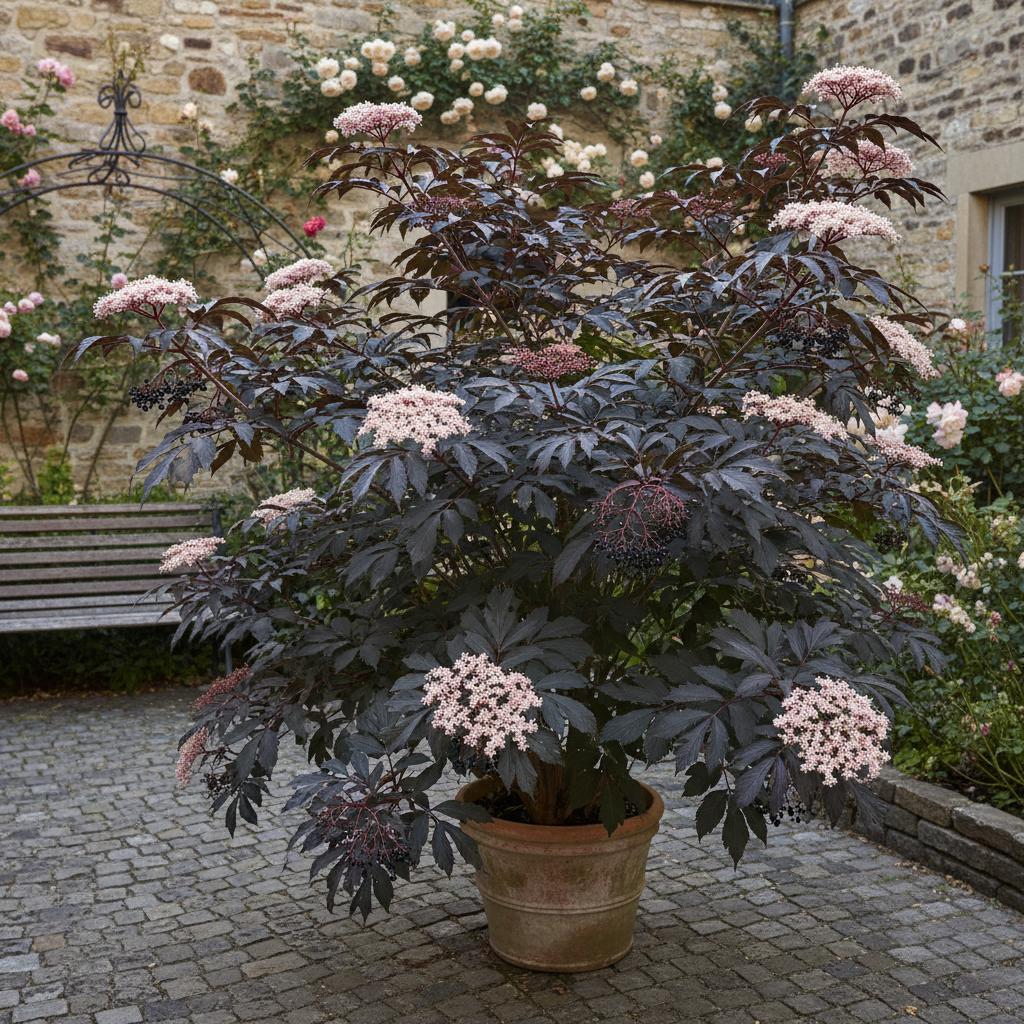
- Leaves: Opposite, pinnately compound with 5-7 serrated leaflets, emitting a distinct scent when bruised;
- Flowers: Large, flat-topped corymbs of tiny, creamy-white, fragrant flowers blooming in early summer;
- Fruit: Drooping clusters of small, globose, glossy dark purple to black drupes;
- Bark: Light gray-brown, becoming deeply furrowed and corky on older branches.
Care Guide
Keep soil consistently moist, especially during flower and fruit development.
Apply a layer of compost or organic mulch around the base before new growth begins.. Elderberries generally require minimal fertilization if planted in rich soil.
Banana Peel and Coffee Ground Tea:Steep banana peels in water for a few days and mix with a small amount of used coffee grounds. Pour around the base to support flowering and fruiting. Avoid applying uncomposted grounds directly to the stem to prevent mold.- Prune in late winter or early spring while the plant is dormant;
- Remove dead, diseased, or damaged wood to maintain plant health and airflow;
- Cut back older canes (over 3 years old) to the ground to encourage vigorous new, fruit-bearing shoots.
Toxicity
Warning: this plant may be toxic.
Pets: Toxic per ASPCA; ingestion of raw plant parts can cause significant gastrointestinal upset.
Humans: Raw berries, leaves, bark, and roots contain cyanogenic glycosides which can cause severe gastrointestinal distress; cooking destroys the toxins.
Garden Uses & Culture
Culture: In European folklore, the elder tree was deeply respected and believed to be inhabited by the "Elder Mother," a spirit who protected the tree and required permission before any wood was cut to avoid bad luck.
Usage: - **Culinary**: Cooked berries are used for syrups, jams, and wines; flowers are used for cordials and fritters; - **Medicinal**: Historically used in traditional European herbalism for immune support and treating cold symptoms; - **Ecological**: Excellent for wildlife gardens, providing food for birds and nectar for pollinators.