 PlantFun
Plant Needs
Sunlight
Requires full, direct sunlight for optimal growth and fruit production.
Watering
Keep soil consistently moist but not waterlogged; allow the top inch of soil to dry out between waterings.
Temperature
Thrives in hot, humid climates; highly sensitive to frost and cold drafts.
Characteristics
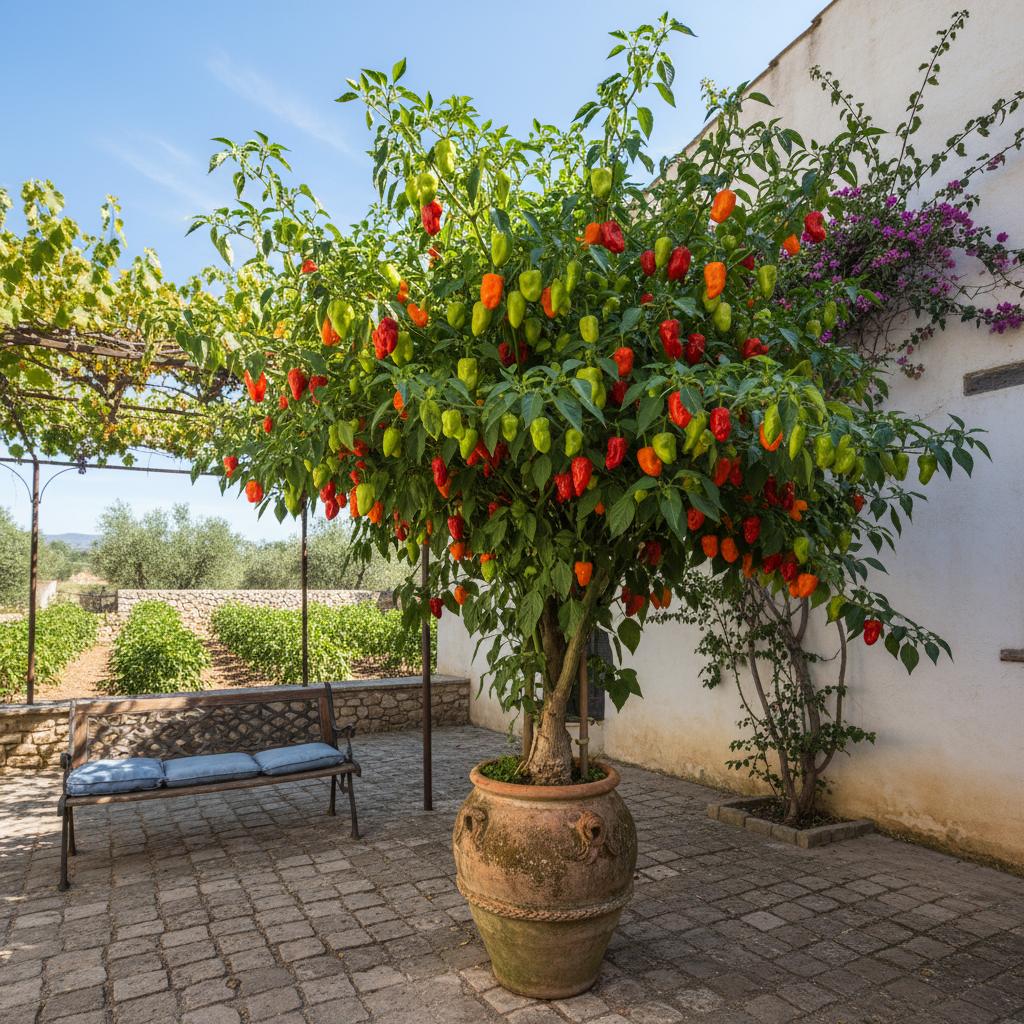
- Leaves: Ovate to lanceolate, green, slightly wrinkled, 4 - 12 cm long, alternate arrangement;
- Flowers: Small, star-shaped, greenish-white to white, typically occurring in clusters of two or more at each node;
- Fruit: Pendent, elongated, 5 - 8 cm long, featuring a distinctively wrinkled, dentate skin, ripening from green to vibrant red, containing extreme levels of capsaicin;
- Stem: Green, branching, becoming somewhat woody at the base with age.
Care Guide
Watering
Water deeply 2-3 times a week depending on heat and evaporation.
Fertilization
Apply a balanced fertilizer to encourage leafy growth.. Feed regularly during the growing season, reducing nitrogen once flowers appear.
Banana Peel & Eggshell Tea:Steep chopped banana peels in water for 2 days, mix with finely crushed, rinsed eggshells. Apply to soil to boost fruiting and prevent blossom end rot. Avoid foul odors by not over-fermenting.Pruning
- Pinch off early flowers on young plants to encourage stronger root and vegetative growth;
- Remove lower leaves touching the soil to prevent soil-borne diseases;
- Prune for airflow in the center of the plant to reduce humidity-related fungal issues.
Toxicity
Warning: this plant may be toxic.
Pets & Humans
Pets: Toxic (per ASPCA), capsaicin causes oral and gastrointestinal irritation.
Humans: Technically edible, but extreme capsaicin levels cause severe mucosal irritation and burning.
Garden Uses & Culture
Culture: Famous in global chili-eating challenges and deeply rooted in the culinary traditions of Northeast India.
Usage: Used sparingly as a culinary spice, in extreme hot sauces, and historically smeared on fences in India as an elephant deterrent.