 PlantFun
Plant Needs
Characteristics
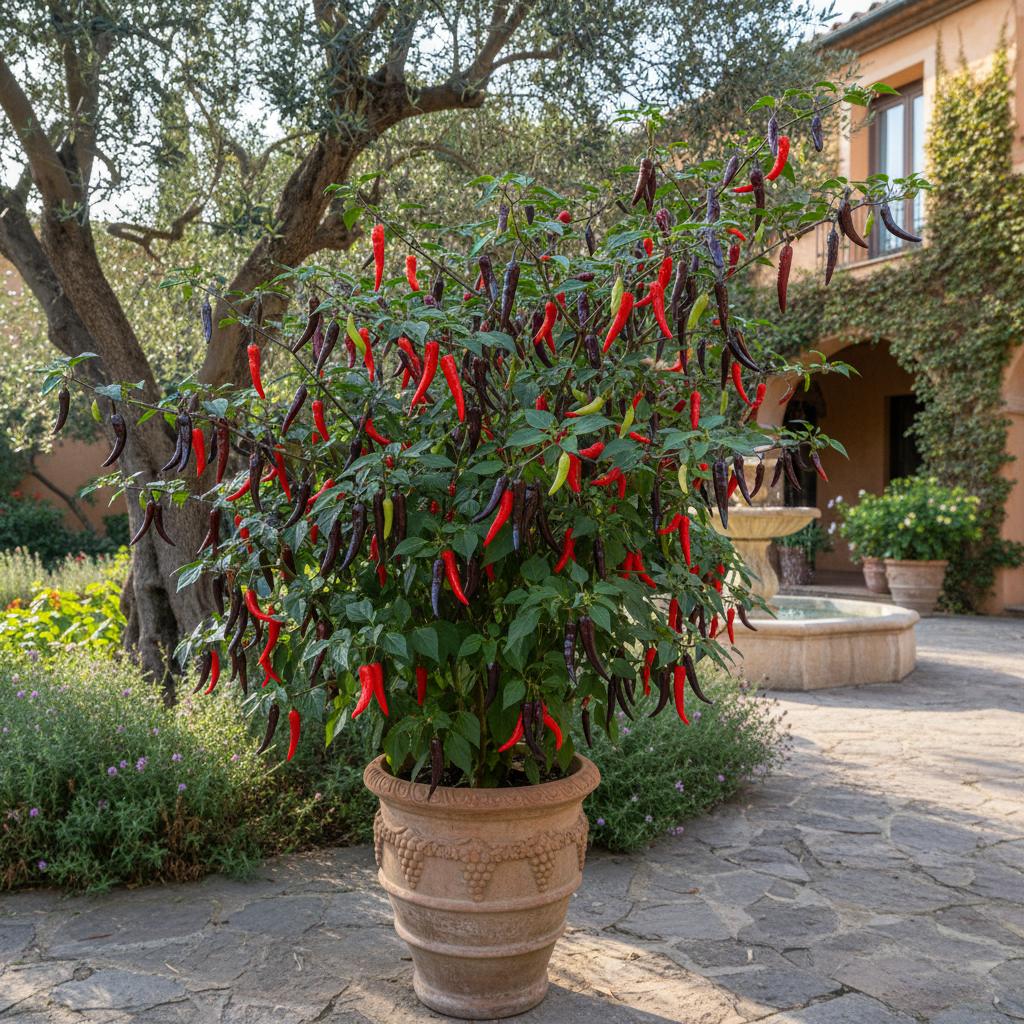
- Leaves: Dark purple to almost black, ovate to lanceolate, with prominent venation; coloration intensifies in direct sunlight.
- Flowers: Small, star-shaped, white with purple margins or streaks, typical of the Capsicum genus.
- Fruit: Elongated, pendant pods that start dark purple or black and uniquely remain dark purple when fully ripe, highly pungent.
- Stem: Dark purple, becoming woody at the base as the plant matures.
Care Guide
Water deeply 2-3 times a week depending on heat and evaporation.
Apply a nitrogen-rich organic fertilizer to encourage strong foliar growth.. Feed regularly during the active growing season for optimal pod production.
Banana Peel Tea:Steep chopped banana peels in water for 24-48 hours. Dilute 1:1 with water and apply to the base of the plant to boost flower and fruit development. Discard solids in compost to avoid attracting pests.- Pinch off the first early flowers to encourage the plant to put energy into growing a larger, bushier canopy.
- Remove any yellowing or diseased leaves near the base to improve airflow.
- Prune back heavily at the end of the season if attempting to overwinter the plant indoors.
Toxicity
Warning: this plant may be toxic.
Pets: Toxic per ASPCA; ingestion of leaves or spicy fruits can cause oral and gastrointestinal irritation.
Humans: Fruits are edible but extremely spicy; capsaicin can cause severe skin and eye irritation. Foliage contains solanine-like compounds causing mild upset if ingested in large amounts.
Garden Uses & Culture
Culture: Discovered by Neyde Hidalgo in her Brazilian garden, this natural cross quickly became a favorite among Western chili enthusiasts and breeders for its unique trait of retaining its dark purple color upon ripening, unlike most peppers that turn red or orange.
Usage: Highly valued as an ornamental edible; the extremely hot pods are used in spicy salsas, hot sauces, and dried chili powders.