 PlantFun
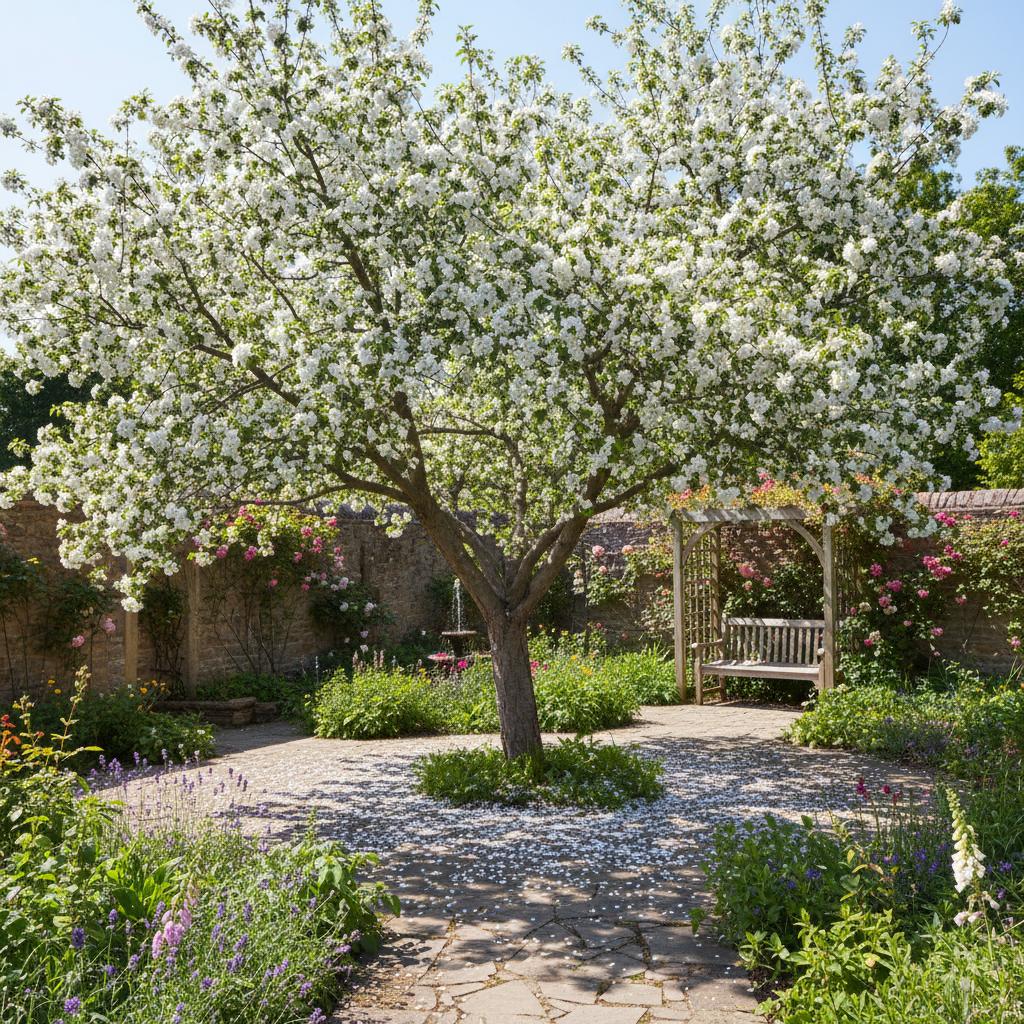
Plant Needs
Characteristics
- Leaves: Alternate, simple, oval to elliptic, 5-12 cm long, with serrate margins and pubescent undersides;
- Flowers: Corymb-like inflorescence, 5 petals, white with pink tinges, 3-4 cm in diameter, numerous stamens;
- Bark: Grayish-brown, becoming scaly and fissured with age;
- Fruit: Fleshy pome, varying in color from green to yellow to red, with a cartilaginous core containing seeds.
Care Guide
Water deeply once a week during active growth and fruiting, especially during dry spells.
Apply a balanced fertilizer as buds begin to swell.. Avoid heavy nitrogen late in the season to prevent tender new growth before frost.
Banana Peel and Coffee Ground Mix:Bury chopped banana peels and a small amount of used coffee grounds in the soil around the drip line. Avoid placing directly against the trunk to prevent rot. This provides gentle, slow-release nutrients.- Timing: Prune in late winter or early spring while the tree is still dormant;
- Structure: Remove dead, diseased, or crossing branches to maintain a strong framework;
- Airflow: Thin out the center of the canopy to improve air circulation and sunlight penetration;
- Fruiting Wood: Preserve short, thick branches (spurs) where fruit develops.
Toxicity
Warning: this plant may be toxic.
Pets: Toxic per ASPCA. Stems, leaves, and seeds contain cyanide; the fleshy fruit is safe.
Humans: Flesh is perfectly safe and edible; seeds contain amygdalin (cyanogenic glycoside) which can be mildly toxic if chewed in large quantities.
Garden Uses & Culture
Culture: In Western traditions, the apple is a powerful symbol of knowledge, temptation, and immortality, famously associated with the Garden of Eden and the mythical island of Avalon.
Usage: - **Culinary**: Eaten fresh, baked in pies and pastries, processed into applesauce, and fermented into cider or vinegar; - **Ornamental**: Valued for its spectacular spring floral display.