 PlantFun
Plant Needs
Characteristics
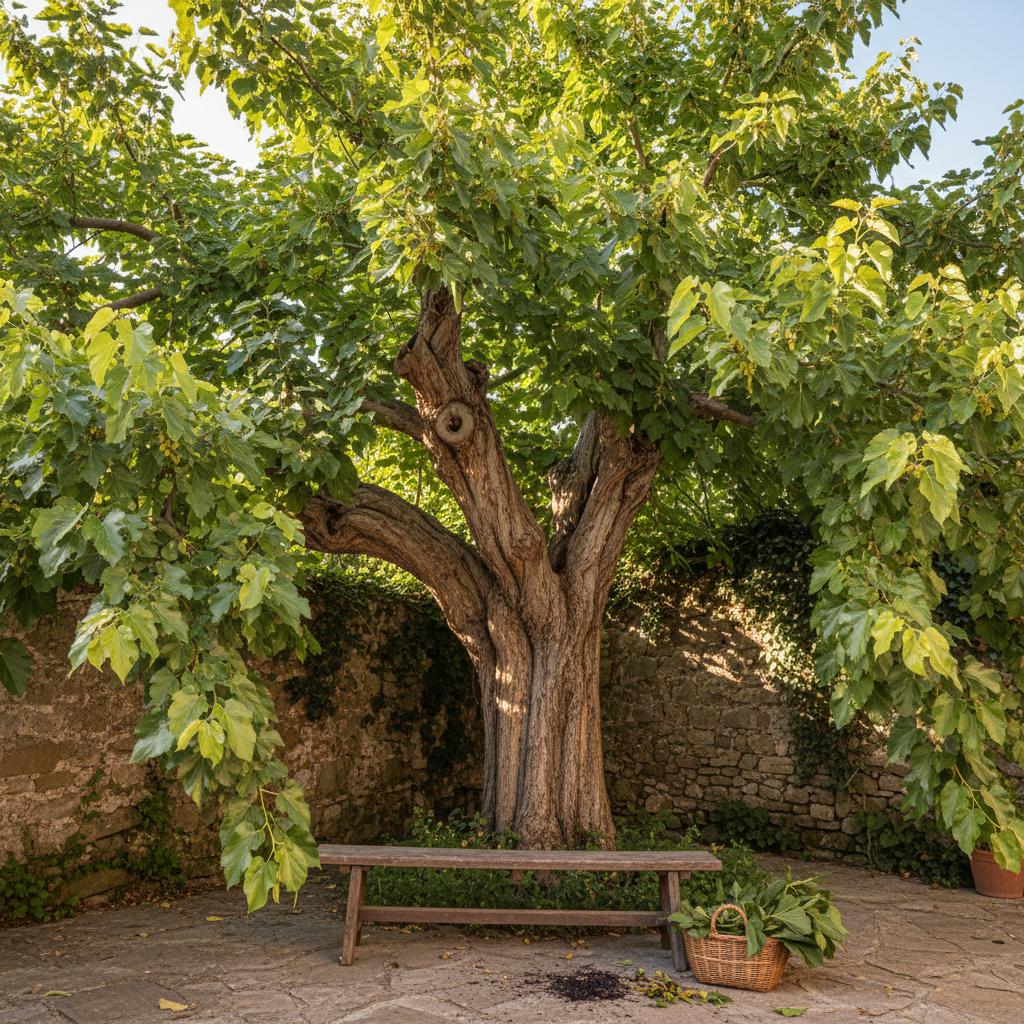
- Leaves: Alternate, simple, 5-15 cm long, highly variable in shape (often lobed on young trees, unlobed on mature trees), with serrate margins and a glossy green upper surface;
- Flowers: Monoecious or dioecious; small, inconspicuous greenish catkins appearing in spring;
- Fruit: A multiple fruit (syncarp), 1-2.5 cm long, ripening from white or green to pink, red, or dark purple;
- Bark: Light grayish-brown, developing shallow vertical fissures and broad ridges with age.
Care Guide
Water deeply once a week during active growth and fruit development.
Apply a balanced organic layer of compost at the base.. Mulberries generally do not require heavy fertilization once established.
Banana Peel and Coffee Ground Mix:Bury chopped banana peels and a small amount of used coffee grounds in the soil around the drip line. This provides a slow release of potassium for fruiting and nitrogen for leaf growth. Cover well with soil to prevent mold and odors.- Prune during winter dormancy (December to February) to prevent excessive sap bleeding;
- Remove dead, diseased, or crossing branches to maintain an open canopy;
- Thin out crowded interior branches to improve air circulation and light penetration;
- Avoid heavy pruning in spring, as the tree will bleed sap heavily from cuts.
Toxicity
Warning: this plant may be toxic.
Pets: Non-toxic per ASPCA.
Humans: Ripe fruits are edible and safe. Unripe fruits and milky sap contain latex that may cause mild stomach upset or skin irritation.
Garden Uses & Culture
Culture: Introduced to Europe in the Middle Ages and later to the Americas by King James I in the 17th century in an ambitious attempt to establish a British silk industry. It has since become a naturalized, sometimes weedy, shade tree across Western landscapes.
Usage: Cultivated for its edible sweet fruits, used in jams and pies. Historically and commercially vital as the primary food source for silkworms. The wood is also used for turning and fence posts.