 PlantFun
Plant Needs
Characteristics
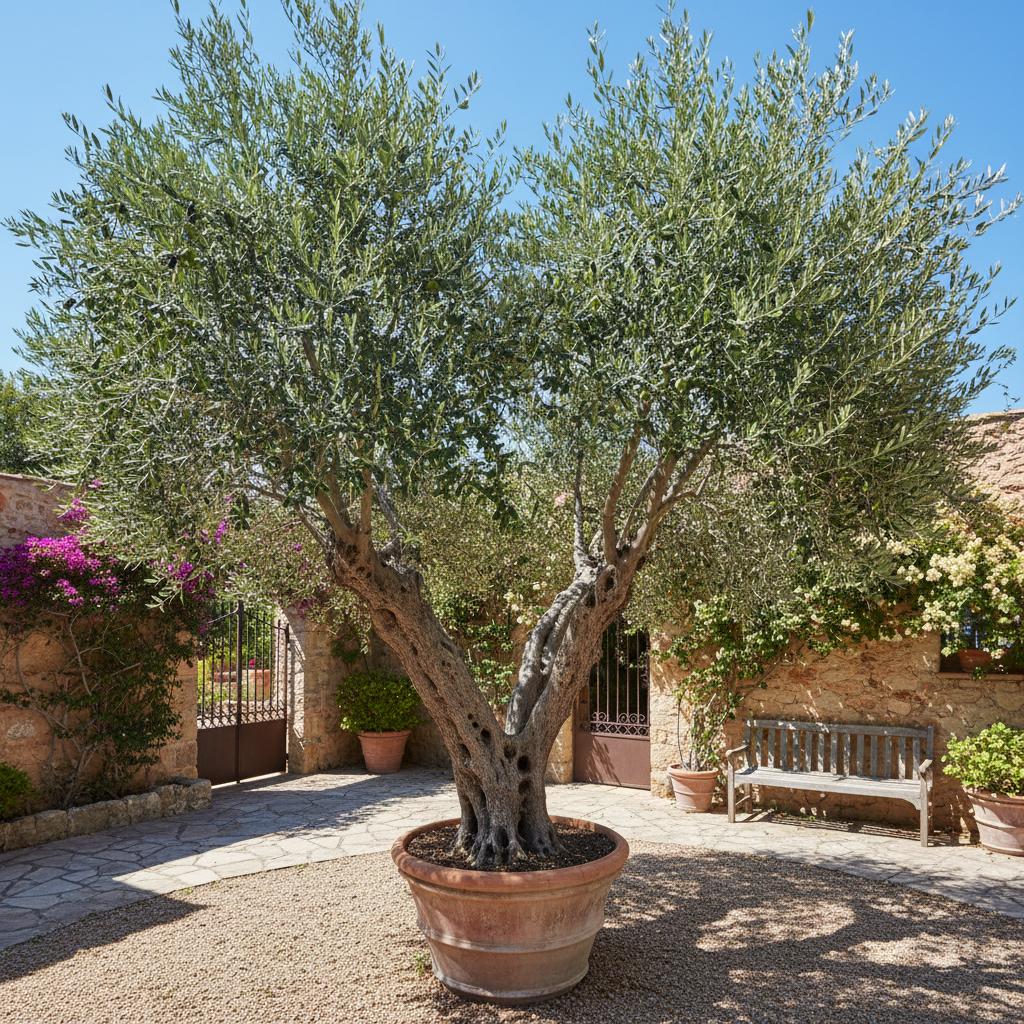
- Leaves: Evergreen, opposite, lanceolate to oblong, 4 - 10 cm long, dark green above, densely covered with silvery scales beneath;
- Flowers: Small, feathery, white or cream-colored, borne in axillary racemes or panicles, fragrant;
- Bark: Pale gray, smooth on young trees, becoming gnarled, twisted, and deeply fissured with age;
- Fruit: A small drupe, 1 - 2.5 cm long, green turning black-purple when ripe, containing a single hard pit.
Care Guide
Water deeply once a week or when the top 2-3 inches of soil are completely dry.
Apply a balanced, slow-release fertilizer just before new growth begins.. Avoid over-fertilizing, especially with nitrogen, as it can promote excessive foliage at the expense of fruit.
Banana Peel and Eggshell Powder:Bake and crush eggshells into a fine powder, mix with chopped, dried banana peels. Scratch lightly into the topsoil around the drip line to support root health and fruiting. Avoid using wet peels to prevent mold and pests.- Prune in late winter or early spring before new growth begins;
- Remove dead, diseased, or crossing branches to improve air circulation;
- Thin out the center of the canopy to allow sunlight to penetrate, which encourages fruiting;
- Keep the tree at a manageable height for easier harvesting and structural integrity.
Toxicity
Warning: this plant may be toxic.
Pets: Non-toxic to cats per ASPCA.
Humans: Non-toxic. The fruits are edible after curing, and the oil is widely consumed.
Garden Uses & Culture
Culture: In Western culture, the olive branch is a universal symbol of peace, reconciliation, and victory, tracing back to ancient Greek mythology (Athena's gift to Athens) and biblical traditions (the dove returning to Noah's Ark).
Usage: Cultivated extensively for olive oil production, table olives (after curing), and as an ornamental landscape tree. The dense, beautifully grained wood is prized for carving and furniture.