 PlantFun
Plant Needs
Characteristics
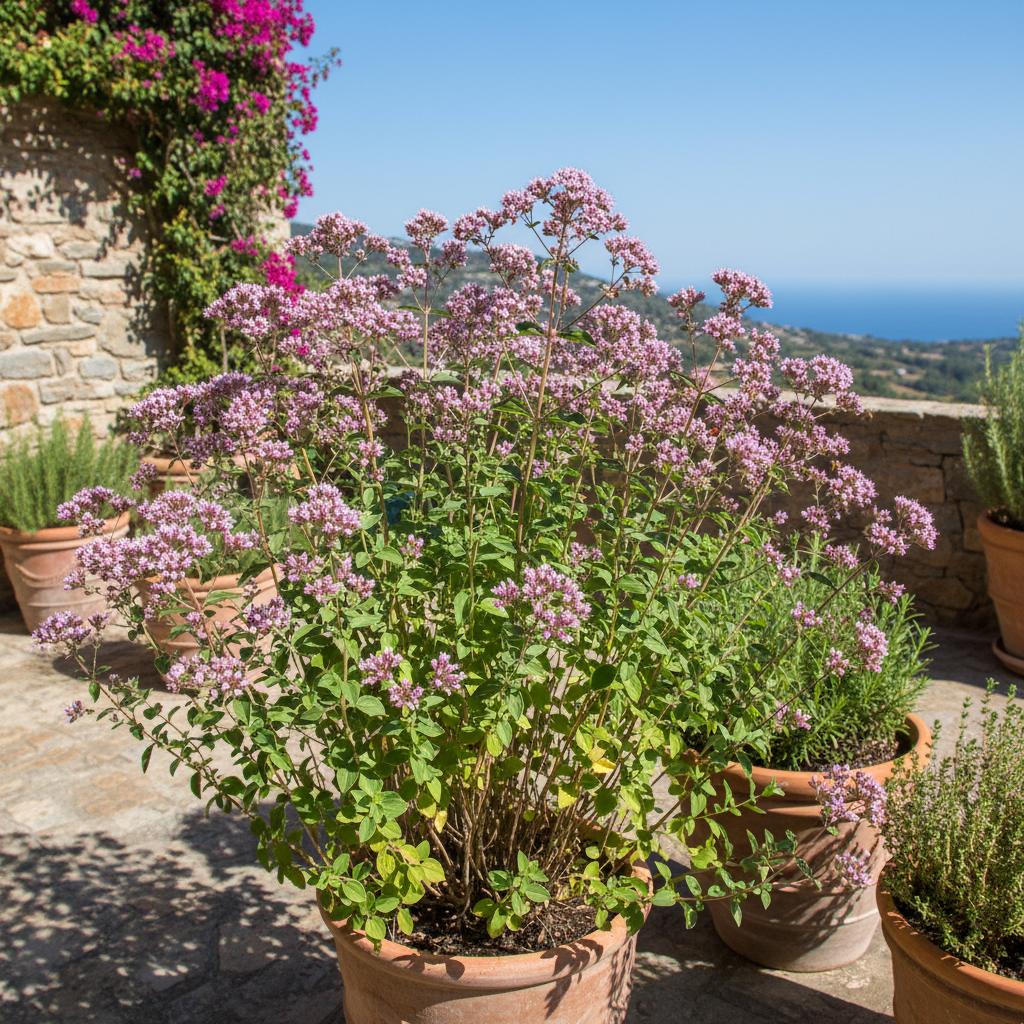
- Leaves: Opposite, ovate to spade-shaped, 1-4 cm long, entire or shallowly toothed margins, covered with glandular hairs that secrete aromatic oils;
- Flowers: Small, tubular, pink, purple, or white, arranged in erect corymb-like panicles at the ends of stems; prominent bracts;
- Stems: Square in cross-section, often purplish, woody at the base, branching and erect.
Care Guide
Water deeply but infrequently, allowing soil to dry out completely between waterings.
Apply a light, balanced organic compost once as new growth begins.. Minimal fertilization is required; poor soils often produce the most flavorful leaves.
Eggshell Tea:Crush clean eggshells and steep in water for a few days. Use the strained water to provide a slight alkaline boost, which oregano loves. Avoid high-nitrogen DIY fertilizers like coffee grounds, which can dilute flavor and encourage weak, leggy growth.- Pinch back growing tips in spring to encourage bushier growth;
- Harvest leaves regularly before flower buds open for the best culinary flavor;
- Cut back stems to the ground in late autumn or early spring to rejuvenate the plant.
Toxicity
Warning: this plant may be toxic.
Pets: Toxic to cats per ASPCA. Ingestion can cause mild gastrointestinal upset.
Humans: Leaves are widely consumed as a culinary herb and are safe for human consumption; essential oil in highly concentrated forms may cause mild skin irritation.
Garden Uses & Culture
Culture: In ancient Greece, oregano was believed to be created by the goddess Aphrodite as a symbol of joy, and crowns of oregano were traditionally worn by brides and grooms.
Usage: Widely used as a culinary herb in Mediterranean, Italian, and Mexican cuisines; its essential oil is utilized in herbal medicine for its antimicrobial properties.