 PlantFun
Plant Needs
Sunlight
Requires full, direct sunlight for optimal growth and fruit production.
Watering
Keep soil consistently moist but well-drained; do not allow the soil to dry out completely.
Temperature
Thrives in warm weather; highly sensitive to frost and cold drafts.
Characteristics
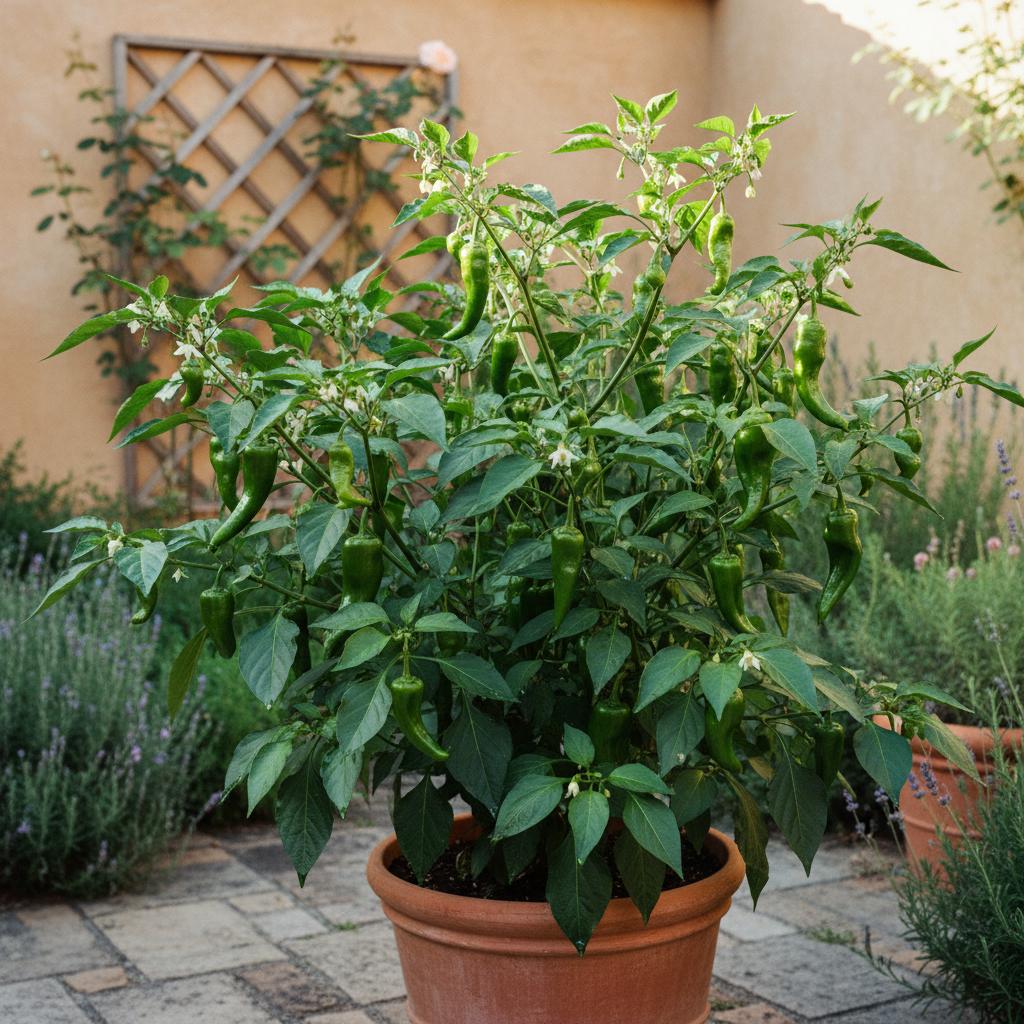
- Leaves: Ovate to lanceolate, 4 - 10 cm long, smooth margins, bright green and slightly wrinkled;
- Flowers: Small, star-shaped, solitary or in small clusters, with 5 to 6 white petals and prominent stamens;
- Fruit: Slender, heavily wrinkled, thin-walled peppers, 5 - 10 cm long, typically harvested green but ripening to red;
- Stem: Herbaceous and green when young, becoming semi-woody and branching at the base with age.
Care Guide
Watering
Water deeply and regularly to maintain even soil moisture, especially during fruit set.
Fertilization
Apply a balanced organic fertilizer to encourage leafy growth.. Avoid excessive nitrogen during the blooming phase, as it promotes foliage over fruit.
Banana Peel Tea:Soak chopped banana peels in water for 24-48 hours. Dilute 1:1 with water and apply to the base of the plant to promote flowering and fruiting. Discard peels in compost to avoid attracting pests.Pruning
- Pinch off the first early flowers to encourage the plant to put energy into growing a stronger, larger structure;
- Prune away lower leaves touching the soil to improve airflow and prevent soil-borne diseases;
- Harvest fruits frequently while they are still green to encourage continuous production.
Toxicity
Warning: this plant may be toxic.
Pets & Humans
Pets: Per ASPCA, Solanaceae plants can cause mild GI upset; capsaicin may cause oral irritation.
Humans: Fruits are widely consumed and safe; leaves are generally not eaten but are not highly toxic.
Garden Uses & Culture
Culture: N/A
Usage: - **Culinary**: Widely used in cooking, typically blistered in a hot pan with oil and sprinkled with coarse salt; - **Agricultural**: Grown as a high-yield summer vegetable crop in home gardens and commercial farms.