 PlantFun
Plant Needs
Characteristics
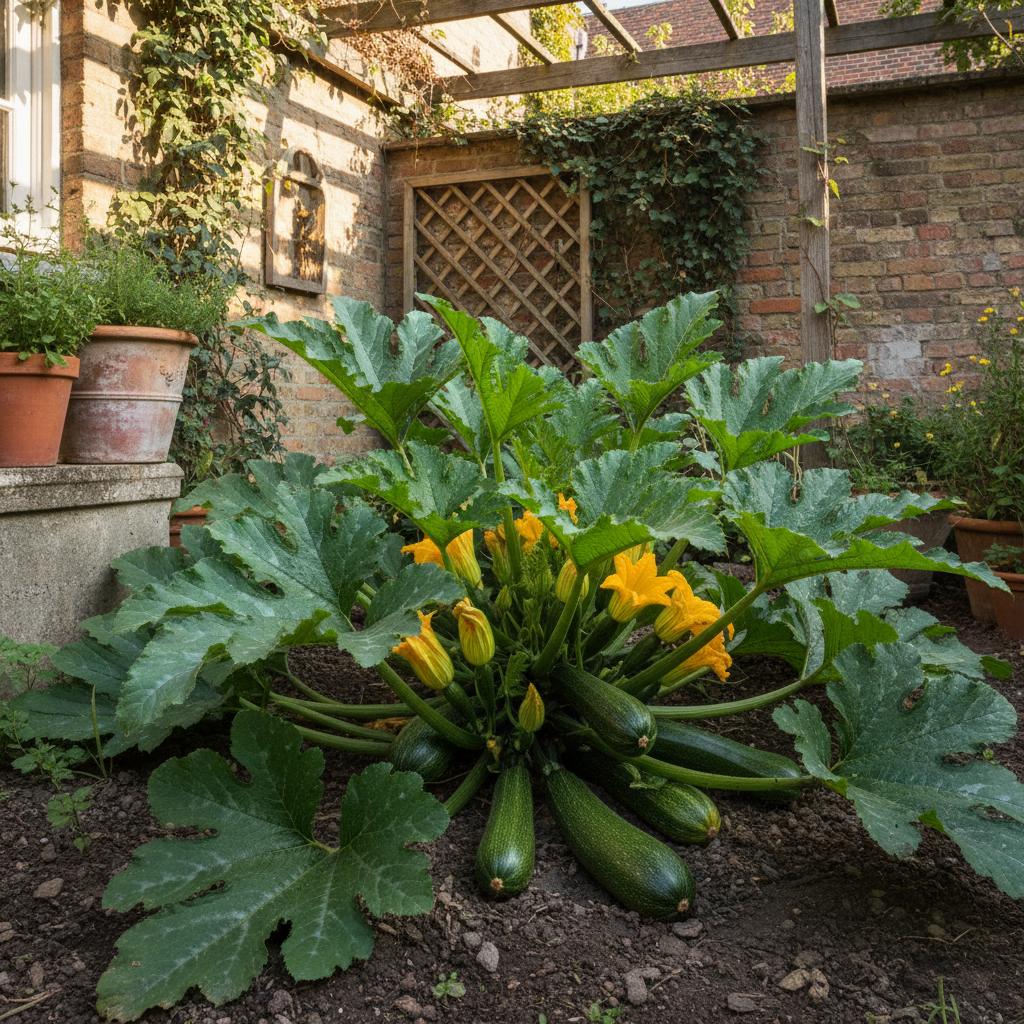
- Leaves: Large, deeply lobed, palmate leaves with prickly petioles, often featuring silvery-white mottling along the veins;
- Flowers: Large, bright yellow, star-shaped, monoecious (separate male and female flowers on the same plant);
- Fruit: Elongated, cylindrical, typically dark to light green, harvested immature for tender flesh;
- Stem: Thick, ridged, and covered in stiff, prickly hairs.
Care Guide
Water deeply at the base of the plant to keep soil consistently moist but not waterlogged, avoiding overhead watering to prevent powdery mildew.
Apply a balanced organic fertilizer at planting to encourage strong vegetative growth.. Fertilization recommendations description
Banana Peel Tea:Steep chopped banana peels in water for 2-3 days. Dilute 1:1 with water and apply to the base of the plant to boost flower and fruit production. Avoid applying raw peels directly against the stem to prevent rot.- Remove older, yellowing, or powdery mildew-infected leaves at the base to improve air circulation;
- Harvest fruits frequently (when 15-20 cm long) to encourage the plant to produce more flowers and fruits;
- Male flowers can be selectively pruned and harvested for culinary use, leaving a few for pollination.
Toxicity
Warning: this plant may be toxic.
Pets: Non-toxic (per ASPCA).
Humans: Non-toxic; fruits and flowers are widely consumed as food.
Garden Uses & Culture
Culture: A staple of summer vegetable gardens in Europe and the Americas, zucchini is famous for its prolific yields, often leading to the cultural joke of gardeners secretly leaving surplus squash on their neighbors' porches.
Usage: - **Culinary**: Fruits are roasted, grilled, sautéed, or baked into breads; - **Culinary**: Blossoms are often stuffed with cheese and deep-fried (a popular Italian dish); - **Companion Planting**: Often grown alongside corn and beans (the Three Sisters method) or with marigolds to deter pests.