 PlantFun
Plant Needs
Characteristics
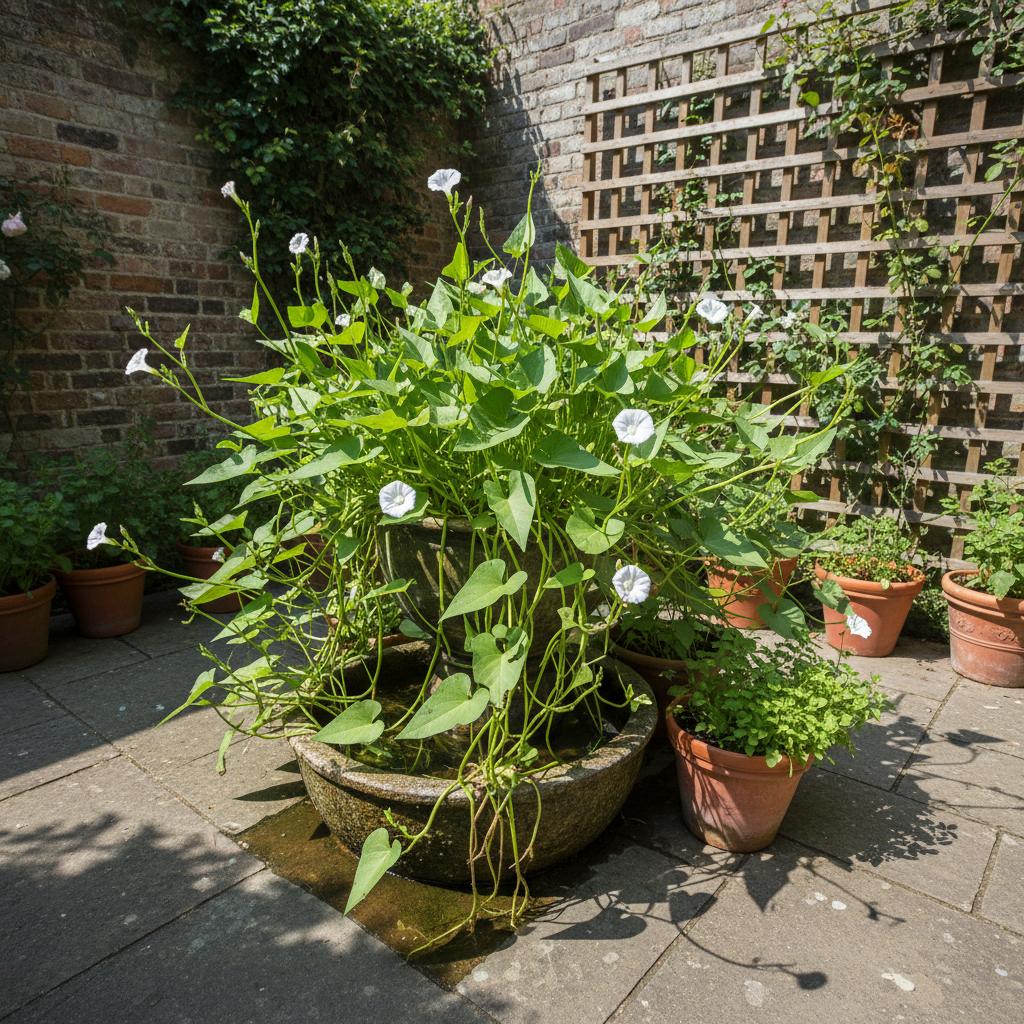
- Leaves: Arrowhead-shaped (sagittate) to lanceolate, 5 to 15 cm long, arranged alternately along the stems;
- Stems: Hollow, smooth, pale green, trailing or floating, rooting readily at the nodes;
- Flowers: Trumpet-shaped, 3 to 5 cm in diameter, typically white with a pale purple or mauve center, solitary or in small clusters;
- Roots: Fibrous root system that develops extensively from stem nodes when in contact with water or moist soil.
Care Guide
Keep soil consistently flooded or extremely wet at all times.
Apply high-nitrogen fertilizer to promote leafy growth.. Requires rich nutrients to sustain its rapid growth rate, especially after harvesting shoots.
Nitrogen-Rich Compost Tea:Steep vegetable scraps and used coffee grounds in water for 3-5 days. Strain and use the liquid to water the plant, promoting lush leafy growth. Avoid using diseased plant parts or high-salt food waste.- Harvesting: Regularly pinch or cut the top 15-20 cm of the shoots to encourage branching and bushier growth;
- Maintenance: Remove any yellowing or decaying leaves from the water to prevent rot and maintain water quality;
- Containment: Prune aggressively if grown outdoors in warm climates to prevent it from escaping into local waterways.
Toxicity
Warning: this plant may be toxic.
Pets: Considered non-toxic to cats, similar to related edible Ipomoea species (like sweet potato vines).
Humans: Safe for human consumption; the leaves and stems are widely eaten as a nutritious vegetable.
Garden Uses & Culture
Culture: In parts of the United States, such as Florida and Texas, it is heavily regulated and classified as a noxious weed due to its aggressive ability to choke waterways, despite its popularity as a cultivated crop in controlled environments.
Usage: - **Culinary**: Tender shoots and leaves are cooked as a leafy vegetable; - **Phytoremediation**: Used in some controlled ecological projects to absorb excess nutrients and heavy metals from polluted water (though plants used this way should not be consumed).